If you’ve ever worked in metal fabrication, construction, automotive restoration, or even marine engineering, you know a sand blasting machine is far more than a noisy, dusty box that blasts grit at surfaces. It’s a precision tool that can strip years of rust, old paint, and corrosion in minutes, prepare parts for welding or coating, and deliver consistent results that manual scraping and sanding can’t match. But here’s the thing: I’ve been supplying sand blasting machines for over a decade, and I can’t tell you how many customers have reached out thinking the control panel is just a bunch of buttons and a screen to turn the machine on and off. That’s like saying the steering wheel of a truck is just for turning left and right. If you don’t understand what the control panel does, you’re not just risking inconsistent work—you’re risking wasted abrasive, damaged parts, and even safety hazards. Today, let’s break down exactly what the control panel of a sand blasting machine is for, why it’s non-negotiable for reliable operation, and how it makes or breaks your blasting results. Sand Blasting Machine
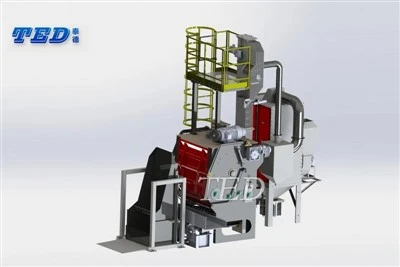
First, let’s start with the basics. A sand blasting machine’s core system is simple in theory: it uses compressed air to propel abrasive material (sand, steel grit, garnet, glass beads, whatever you’re using) at high speed against a surface to clean, etch, or profile it. But make even a small change to that system—like air pressure, abrasive flow, or blast time—and the outcome shifts drastically. If you blast a rusted car frame at too low pressure, you’ll waste hours trying to get the corrosion off, and you might still have pitting left. Too high pressure, and you’ll warp thin metal parts, erode the blasting nozzle faster than it should, or even send abrasive flying back toward you. That’s where the control panel comes in. It’s the central command hub that regulates every variable of that process, turning a messy, inconsistent job into a repeatable, controlled operation.
The biggest function of the control panel is regulating compressed air pressure, and this is where most amateur operators get it wrong. Compressed air is the engine of your sand blaster; it’s what accelerates the abrasive to the correct speed. Too little pressure, and your abrasive barely makes a mark—too much, and you’re over-blasting. The control panel’s pressure gauge (often digital these days, not just analog dials) lets you set that pressure precisely. For example, if you’re blasting a thin aluminum part that’s only 1/8 of an inch thick, you’d set the pressure to 40 to 50 PSI to avoid warping. If you’re removing heavy rust from a ½-inch thick steel I-beam for a structural project, you’d crank it up to 80 to 100 PSI to cut through that corrosion fast. A good control panel doesn’t just let you adjust this pressure—it maintains it, too. If your shop’s air compressor kicks on mid-job, dropping line pressure by 10 PSI, the control panel will adjust automatically to keep the blast pressure steady. That’s a huge deal for consistency; if pressure fluctuates every time the compressor cycles, your parts will come out uneven, leading to rework or failed coating later.
Next up: abrasive flow rate control, and this is where the control panel separates entry-level machines from ones that can handle professional, high-volume jobs. Think of abrasive as the fuel for your process—set it too low, and you’re wasting 80% of your time blasting the same spot over and over. Set it too high, and you’re blowing abrasive everywhere, wasting material, clogging your hose, and causing excess dust that makes your shop unsafe. Older sand blasters use a simple valve to crank or cut off abrasive flow, but a modern control panel uses either a precision dial or digital setting to adjust how much abrasive mixes with your compressed air. For instance, a customer I worked with last year owned a small automotive restoration shop; he was using a basic blaster with a manual valve and going through 50 pounds of glass beads in a single afternoon blasting a single truck bed. He upgraded to a machine with a control panel that lets him set flow rate to 2 pounds per minute, and now he uses the same amount of abrasive to do three trucks, and his finish is way more consistent. The control panel also lets you pause abrasive flow mid-blast without turning off the machine—super useful when you need to adjust your angle or move to a different part of a piece without wasting material.
Then there’s time control, which is critical for batch work. If you’re blasting 100 small metal brackets for a construction project, blasting each one for the same amount of time ensures every single part meets your quality standard. The control panel’s timer lets you set that exactly—say, 15 seconds per bracket—and the machine will stop automatically when that time is up. No more guessing if you blasted part A for 20 seconds and part B for 10, which would leave one under-cleaned and one over-blasted. For larger jobs, like stripping a 10-foot long steel pipe, some control panels have a continuous mode that lets you run the machine for hours without stopping, maintaining pressure and flow the whole time. We had a customer in the agricultural sector that uses our industrial sand blasters to restore farm equipment parts; their control panels let them set a 2-hour blast cycle for a large tractor frame, so they can walk away and do other tasks knowing the machine is running consistently.
Safety is another function that’s often overlooked, and the control panel is your first line of defense here. Sand blasting is a noisy, dusty job, and the control panel has built-in safety features to protect both the operator and the machine. For example, most modern control panels have an emergency stop button that cuts power to the entire machine instantly if something goes wrong—like if a hose bursts, an operator trips, or abrasive starts leaking where it shouldn’t. They also have pressure relief valves that automatically release excess air if pressure gets too high, preventing hose ruptures or tank damage. Some even have interlocks that won’t let the machine turn on unless the blast cabinet door is closed, so abrasive can’t fly out into the shop and harm bystanders. I’ve seen far too many operators skip control panel safety features, trying to disable the interlock to get the job done faster, and that’s when accidents happen. The control panel isn’t just for efficiency—it’s there to keep you safe.
Wait, let’s not forget data tracking, either. These days, many of the control panels we install on our industrial sand blasting machines have basic data logging. That means you can track how much pressure you used, how long each blast cycle took, and how much abrasive you used per job. For a business owner, that’s gold. You can identify inefficiencies—like if a certain job is using way more abrasive than it should—and adjust your settings to cut costs. You can also document your process for quality control, which is huge if you’re working with clients that need proof you’ve cleaned their parts to a specific standard, like SSPC-SP5 (white metal blast cleaning) or ISO 8501-1. A lot of our customers in aerospace and marine repair require that kind of documentation, and the control panel’s data logging makes that easy, no manual notes needed.
Now, I know what some of you are thinking: “I can just use a cheap sand blaster without a fancy control panel for small jobs, right?” Sure, if you’re blasting a single garden tool in your garage on the weekend, you can use a basic blaster with an on/off switch and a pressure gauge you have to read manually. But if you’re running a business, taking on regular jobs, or doing any work that needs consistent, high-quality results, that control panel isn’t a luxury—it’s a necessity. I’ve had customers come to me after buying a cheap, no-control-panel blaster online, complaining that their parts are coming out uneven, they’re going through way too much abrasive, and they’re dealing with constant pressure drops that make their jobs take twice as long. When they upgrade to a machine with a proper control panel, their productivity jumps, their material costs go down, and their customer satisfaction goes up.
Let me give you a real example. A few months ago, we had a customer who owned a small custom fabrication shop. He’d been using a $500 sand blaster from a big box store for two years, and he was always falling behind on deadlines. He’d blast a steel frame, and half the time it had leftover mill scale, so he had to go back over it with a wire brush. He was also going through 80 pounds of steel grit a week, which was eating into his profits. We sold him an entry-level industrial sand blaster with a digital control panel, and he called me a week later, shocked. “I blasted three frames in the time I used to blast one,” he said. “I only used 40 pounds of grit, and the finish is so consistent my client didn’t even need extra work.” That’s the control panel at work: it regulated pressure so he didn’t over-blast, controlled abrasive flow so he wasn’t wasting material, and let him set a standard blast time so every frame was cleaned the same.
Of course, not all control panels are created equal. When I’m supplying sand blasting machines, I always make sure my customers know the difference between a basic control panel and a high-end one. A basic control panel will let you set pressure, flow, and time, and has an emergency stop. A high-end one will have digital readouts, automatic pressure maintenance, data logging, and even remote monitoring, so you can check how your machine is running from your phone if you’re at another job site. For most small to medium businesses, the basic digital control panel is more than enough. For large industrial operations with 24/7 blasting, the high-end version is worth every penny.
Another thing to mention: the control panel also simplifies training. If you’re a business owner, you don’t want to spend weeks training a new operator on how to adjust a manual pressure valve and abrasive flow. A control panel with preset settings—like a “rust removal” setting, “paint stripping” setting, or “profile finishing” setting—lets a new operator just select the job type, and the machine adjusts all the variables automatically. No guessing, no wrong settings, no wasted time training someone on complicated manual adjustments. That makes hiring and onboarding way easier.
Now, let’s talk about common mistakes people make with control panels. The biggest one is ignoring the calibration. Over time, pressure gauges and flow regulators can drift, so if you don’t calibrate your control panel every few months, your settings won’t be accurate. For example, if you set your pressure to 80 PSI, but the gauge is reading 70 PSI, you’re blasting at 10 PSI less than you think, which will make your job take longer and use more abrasive. Another mistake is using the wrong settings for the job. Just because a setting works for rust removal doesn’t mean it works for glass bead blasting for a finish. A good control panel lets you save presets so you don’t have to adjust the same settings over and over, but you still have to know which settings to use for which material. That’s why when I supply a sand blasting machine, I always walk the customer through how to use the control panel, give them a cheat sheet of settings for common jobs, and offer ongoing support if they have questions.
At the end of the day, the control panel is the brain of your sand blasting machine. It’s not just a collection of buttons—it’s what turns raw compressed air and abrasive into a controlled, efficient process that saves you time, money, and hassle. If you’re in the market for a sand blasting machine, don’t cut corners on the control panel. A machine with a good control panel will pay for itself in no time with consistent results, lower material costs, and less downtime from rework or safety issues.

If you’re tired of inconsistent blasting results, wasting abrasive, or dealing with safety headaches from an outdated control panel, I’m here to help. We supply sand blasting machines tailored to all types of businesses, from small automotive shops to large industrial fabrication facilities, with control panels that meet your specific needs. Whether you need a basic digital control panel for a small operation or a high-end one with data logging for a large industrial site, we can find the right fit for you. Reach out to talk through your requirements and find the perfect sand blasting machine that will make your jobs faster, more efficient, and more profitable.
Clay Sand Line References
- “SSPC: The Society for Protective Coatings. Surface Preparation Standards for Abrasive Blasting.”
- American National Standards Institute (ANSI). Safety Requirements for Abrasive Blasting Operations (ANSI B7.1).
- Metallic Powder Industries Federation (MPIF). Guidelines for Abrasive Flow Rate Control in Surface Preparation Processes.
- Occupational Safety and Health Administration (OSHA). Abrasive Blasting Safety and Health Guidelines.
Qingdao Taide Machinery Co., Ltd.
We are one of the most experienced sand blasting machine manufacturers and suppliers in China. With a professional production team, we offer a wide range of products with superior quality. Please rest assured to wholesale durable sand blasting machine for sale here from our factory.
Address: No.383, Zhaizi Mountain, Huangdao District, Qingdao Shandong China.
E-mail: krystal@qdtedmachine.com
WebSite: https://www.qdted-group.com/
