As someone who’s spent the last 12 years selling hydraulic gear pumps to agricultural, construction, and industrial clients across North America and parts of Europe, I’ve learned that even the most rugged, well-built pump can fail early if its sealing methods aren’t right for the application. I’ve seen it happen: a farmer in Iowa who used a standard lip seal on a harvest combine’s grain transfer pump, only to have it blow out halfway through a 12-hour run; a mining operation in Alberta that lost three pumps in a month because their O-rings couldn’t handle extreme cold and hydraulic fluid pressure. That’s why sealing isn’t just a technical detail—it’s make-or-break for a pump’s performance, longevity, and your bottom line. Today, I want to walk you through the most common sealing methods for hydraulic gear pumps, what makes each work, when they shine, and the mistakes I see clients make all the time. Hydraulic Gear Pump
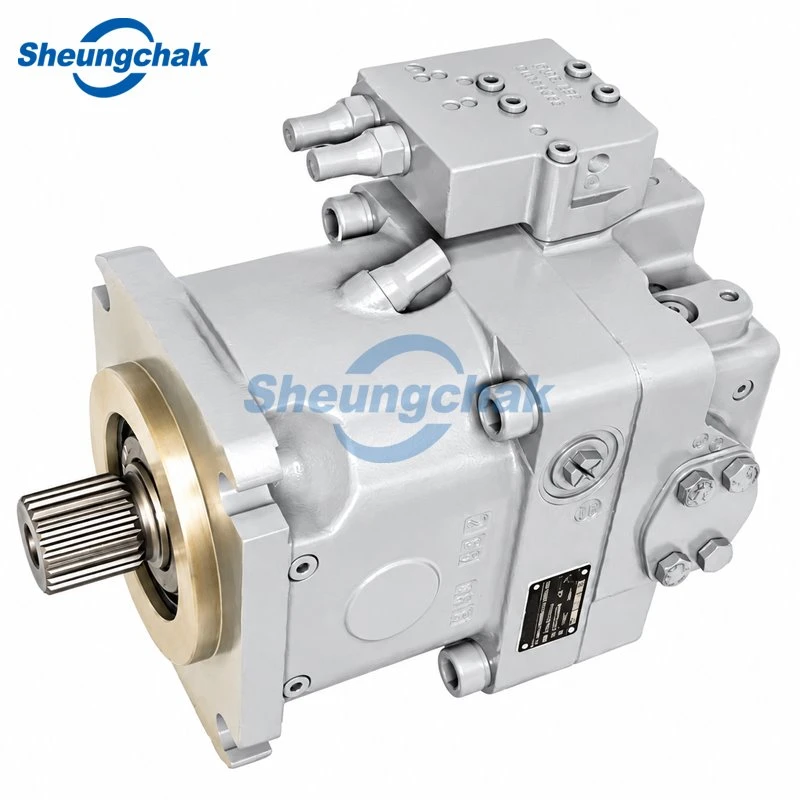
First, let’s level set on why gear pumps need such robust sealing. Unlike piston pumps that operate with tight tolerances inside a cylinder, gear pumps rely on two meshing gears rotating in a housing. The spaces between the gears, housing, and end plates create the suction and pressure zones that move hydraulic fluid. If those gaps are too big, fluid leaks back from the high-pressure outlet to the low-pressure inlet—wasting energy, lowering efficiency, and causing overheating. If sealing fails, you’ll get external leaks (fluid on the floor, safety hazards, wasted product) or internal leaks that damage components over time. So every seal we choose has to balance three things: pressure rating, compatibility with hydraulic fluids (mineral oil, synthetic fluids, water-glycol blends), and resistance to wear from repeated rotation.
The most basic, and most commonly used, sealing method for gear pumps is the O-ring and gland sealing system. I’d wager 70% of the gear pumps we ship use O-rings somewhere in their sealing stack, usually on the end plates or around the port connections. O-rings are simple: a circular elastomer ring that sits in a machined groove (the gland) and compresses slightly when two mating surfaces come together. That compression creates a tight, flexible seal that can handle small amounts of movement and vibration—perfect for the repetitive motion of a rotating gear pump. The elastomer material is key here: nitrile rubber (Buna-N) is the workhorse, compatible with standard mineral hydraulic oil and rated for pressures up to 2,000 PSI, which works for most light to medium-duty applications like farm tractors or small construction lifts. For higher pressures (2,000 to 3,000 PSI) or synthetic fluids, we switch to fluorocarbon (Viton) O-rings, which hold up better to heat and chemical breakdown. The big mistake I see with O-ring seals is improper gland design or installation. If the gland is too deep, the O-ring doesn’t compress enough to form a seal; too shallow, and it squeezes out when pressure spikes. Last year, a client in Ohio installed a set of O-rings in a pump we sold him, but he machined the gland 0.01 inches too shallow during assembly, and by the end of the first week, three O-rings had extruded out of the groove, causing a major leak. We had to replace the whole pump, and he lost a week of harvest time. Pro tip: always follow the gland dimension specs from the pump manufacturer, or call me if you need clarification— I’ve got a cheat sheet for common O-ring gland sizes for gear pumps that saves folks a lot of headaches.
Next up, lip seals (also called shaft seals) are the go-to for sealing the rotating shaft that sticks out of the pump housing. That shaft is moving in and out as the gears rotate, so it needs a seal that can follow that motion without leaking. Lip seals have a flexible rubber body, a metal casing to give them shape, and a tiny spring around the inner edge of the lip that pushes the lip tight against the rotating shaft. That spring is crucial: it keeps the lip in contact even when the shaft wears a tiny amount or vibrates. For most general-purpose gear pumps, we use standard double-lip nitrile lip seals. The outer lip keeps dirt, dust, and moisture out of the pump (super important for outdoor construction and farm equipment, where debris is everywhere), and the inner lip keeps hydraulic fluid in. For high-pressure applications, like the hydraulic systems on a excavator that can hit 3,500 PSI, we upgrade to heavy-duty lip seals with a reinforced PTFE coating on the lip. PTFE is slippery, so it reduces friction on the shaft, which cuts down on wear and lets the seal handle higher pressures without deforming. I once had a client with a forestry mulcher that was blowing through lip seals every two months on his pump for the cutting head. Switching to PTFE lip seals doubled the seal’s lifespan, and he hasn’t had to replace one in over three years. The mistake here is using a lip seal that’s rated for too low a pressure, or not matching the seal’s inner diameter to the shaft’s exact size. A shaft that’s even a hair worn (say, from 10 years of use) can make a standard lip seal leak, so if you’re retrofitting a pump, always measure the shaft first before ordering a replacement seal.
For applications that push pressure even higher—think 3,000 to 5,000 PSI, like mobile cranes or heavy mining equipment—we turn to surface-mounted piston seals and back-up rings, which are part of what’s called a “hydraulic seal stack.” This method is more complex, but it’s built to handle extreme pressure and prevent seal extrusion (that’s when pressure pushes the seal out of its groove). The main seal is usually a rectangular or D-shaped ring made of a hard, durable material like polyurethane or PTFE, designed to slide between two mating surfaces (like the end plate and housing) to block fluid flow. But at high pressures, the main seal can squeeze into the gap between the two surfaces, so we add back-up rings made of a stiffer material, usually nylon or PTFE, that fill the gap and hold the main seal in place. For example, a gear pump for a mining haul truck might have a polyurethane main seal, paired with two PTFE back-up rings on the high-pressure side. This system handles much higher pressure than O-rings or lip seals alone, and it’s far less likely to leak even under heavy load. I’ve also seen these stacks used in pumps that run on non-standard fluids, like water-based hydraulic fluids or biodegradable synthetic oils, which can break down standard elastomer seals. The downside is that surface-mounted piston seals require precise machining of the grooves, so they’re not the best for low-cost, off-the-shelf pumps—they’re more for custom, high-performance units.
Another sealing method that’s gaining traction in industrial gear pumps is metallic sealing, sometimes called metal-to-metal sealing. This isn’t the soft elastomer or plastic seals we’ve talked about so far; instead, two precision-machined metal surfaces are ground to such tight tolerances that they form a seal on their own, without any soft material in between. It sounds counterintuitive, but when done right, it’s incredibly reliable for applications that can’t handle seal degradation. For example, pumps used in food and beverage processing, where they need to be steam-cleaned with high-temperature water that would melt or erode elastomer seals, use metallic sealing. Or pumps in the oil and gas industry that handle corrosive fluids that would eat through PTFE or polyurethane. The metal used is usually stainless steel or a hard alloy like Hastelloy, and the mating surfaces are lapped to a finish of less than 0.2 microns—so tight that even hydraulic fluid can’t pass through the tiny gaps. The drawback? It’s expensive, and it’s very sensitive to misalignment. If the two metal surfaces aren’t perfectly aligned, they’ll wear out quickly, causing leaks. We only use metallic sealing for specialized pumps where no other method will work, not for standard applications.
I also want to mention a sealing problem that’s become more common as we build smarter equipment: sealing for variable-displacement gear pumps. These pumps, which are used in newer construction equipment that adjusts their flow rate based on load, have moving parts inside the pump, not just the gears. The extra moving parts mean more points where sealing is needed, and those seals have to handle variable pressure as the pump changes speed. For these pumps, we combine O-rings on the stationary ports, lip seals on the rotating shaft, and specialized piston seals on the moving pistons that adjust displacement. The key here is that all the seals have to be compatible with the control systems of the variable pump—if a seal is too stiff, it can slow down the displacement adjustment, leading to lost efficiency.
At the end of the day, the right sealing method depends on four main factors: your pump’s operating pressure, the type of hydraulic fluid you’re using, the environment the pump is running in, and how often you need to perform maintenance. A lot of clients I talk to just ask for the cheapest pump they can get, but I always take the time to walk through their specific needs. For example, a small farm using a tractor for light hay work doesn’t need a pump with metallic sealing— a standard O-ring and lip seal system will work for years, and it’s easy to replace when it does wear out. But a mining operation running pumps 24/7 in -20°F weather and handling high-viscosity hydraulic fluid will need the heavy-duty piston seal stack with Viton O-rings to avoid downtime.

I’ve been in this industry long enough to know that a bad seal doesn’t just waste fluid—it costs you time and money. I’ve helped clients go from replacing two pumps a month to going two years without a seal failure just by switching to the right sealing method for their application. If you’re shopping for hydraulic gear pumps, or you’re dealing with persistent seal leaks on existing pumps, don’t waste time guessing. Reach out to us to discuss your needs, share details about your application, operating pressure, and fluid type, and we’ll help you find the pump with the right sealing system to keep your equipment running smoothly. No sales pitches, no hard sells—just 12 years of experience in the hydraulic pump industry helping folks avoid the mistakes I’ve seen over and over.
Hydraulic Motor References
Hydraulic Institute. (2020). Gear Pump Design and Application Standards. Hydraulic Institute Press.
Mobley, R. K. (2014). Fluid Power Sealing Technology (3rd ed.). Elsevier.
Shock, W. (2018). Sealing Methods for Hydraulic Pumps and Motors. Industrial Press.
Guangdong Sheungchak Hydraulic Technology Co., Ltd.
Guangdong Sheungchak Hydraulic Technology Co., Ltd. is one of the most professional hydraulic gear pump manufacturers and suppliers in China. We are committed to providing high quality customized products with competitive price. Please rest assured to wholesale durable hydraulic gear pump for sale here and get pricelist from our factory.
Address: Building 25, Liantang Industrial City, Shangcun Community, Gongming Subdistrict, Guangming District, Shenzhen, China
E-mail: info@hydraulicsc.com
WebSite: https://www.hydraulicsc.com/
