If you’ve ever walked through a power substation, you’ve seen high-voltage circuit breakers standing tall, their matte steel housings glinting under industrial lights, silently protecting entire communities from electrical overloads, short circuits, and faults. As a supplier of these critical components, I’ve spent thousands of hours on-site with maintenance teams, troubleshooting breakers that had outstayed their usefulness, and walking through plants with clients who weren’t sure if a simple repair would suffice or if a full replacement was the only safe, cost-effective move. The line between “needs a tune-up” and “needs to go” isn’t always clear, but ignoring the warning signs isn’t just a headache—it’s a risk to worker safety, grid reliability, and long-term operational costs. Today, I’m breaking down the science-backed signs that tell you when it’s time to replace your high-voltage circuit breaker, based on decades of real-world service data and on-the-ground experience. High-voltage Circuit Breaker
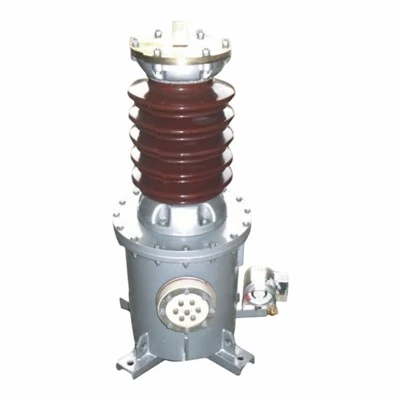
First, let’s ground this in how a high-voltage circuit breaker works, because its primary job is non-negotiable: it has to interrupt electrical current safely, even when fault conditions hit. A breaker’s life expectancy isn’t arbitrary—most standard models are designed for 20 to 30 years of active service, but that timeline shifts dramatically based on usage, environmental conditions, and how well it’s maintained. A breaker installed in a coastal substation, where salt air eats away at internal components, won’t last as long as one in a dry, temperature-controlled urban facility. A breaker that operates 10+ times a year to clear faults will wear out faster than one that sits idle for years. That’s why “age” alone is rarely a sufficient reason to replace a breaker, but it is often the starting point for deeper inspections.
The first hard red flag is when the breaker’s mechanical wear exceeds manufacturer-recommended limits, and repairs no longer restore reliable operation. Every breaker has a set of mechanical parameters: contact travel, opening and closing times, spring tension, and operating cycle count. For context, a 12kV vacuum circuit breaker, one of the most common types used in distribution grids, is rated for a minimum of 10,000 operating cycles. If a breaker hits that mark and continues to be activated, its mechanical parts—including the contact arms, operating springs, and linkages—will start to degrade beyond repair. I recently worked with a rural utility that had a 25-year-old SF6 circuit breaker that had operated 12,800 times over its life. When their maintenance team tested it, the contact opening time had slowed by 18% from its factory baseline, and the closing spring tension was too weak to reliably trip during a high-current fault. Replacing the springs would have cost nearly half of a new breaker, and even then, the unit’s internal insulation was already showing signs of cracking— a risk that couldn’t be eliminated with repairs. That’s a key point: if wear-related repairs cost more than 50% of a new, energy-efficient breaker, replacement is almost always the smarter long-term choice.
Next, insulation degradation that exceeds industry standards is a non-negotiable replacement trigger. Insulation is the breaker’s first line of defense against electrical arcing, and it breaks down over time, especially in harsh environments. For SF6 breakers, which use sulfur hexafluoride gas as an insulating medium, leaks are a major warning sign. A 10% or more drop in SF6 pressure over a 12-month period is not normal; it means seals are failing, and the gas, which is also a potent greenhouse gas, is leaking into the atmosphere. Worse, a low SF6 pressure means the breaker can’t contain arc energy during a fault, leading to potential explosions or unplanned outages. Last year, a manufacturing plant called us to look at their 15kV SF6 breaker: they’d lost 12% of gas pressure in six months, and their in-house testing found trace levels of moisture inside the gas chamber. Moisture reacts with SF6 to form corrosive byproducts that eat away at internal contacts, and fixing the leak and drying the chamber would have required full disassembly of the unit—something that would have shut down their entire production line for three weeks. For most operations, that downtime cost far outweighed the cost of a new breaker, which could be installed in half the time and came with a 10-year warranty on internal insulation.
For vacuum circuit breakers, which are often used in lower-voltage industrial and distribution settings, insulation degradation shows up as reduced vacuum integrity. Vacuum breakers rely on a sealed vacuum chamber to quench arcs when current is interrupted; if that vacuum is breached, the chamber can’t stop arcing, leading to misoperations. The industry standard for acceptable vacuum integrity is a gas pressure below 1e-5 Torr; if testing shows pressure above that, the chamber is compromised, and there’s no way to repair it—you have to replace the entire breaker. I’ve seen this play out with a school district that had a vacuum breaker powering their gym and administrative offices: an annual insulation test found the vacuum pressure was at 2.3e-5 Torr, high enough that the breaker had a 30% chance of failing to trip during a fault. Repairing the chamber wasn’t feasible, because the vacuum seals are custom-fabricated at the factory, and shipping the unit back would have meant a four-week outage for the district during peak back-to-school season. Again, replacement was the only practical, safe choice.
Electrical performance issues that can’t be resolved with tuning are another critical sign it’s time to replace. Break testers measure how much current a breaker can interrupt, and how much voltage it withstands during a fault. If your breaker’s dielectric strength (its ability to resist electrical breakdown) falls below 75% of its original factory rating, it’s at high risk of flashover or arc faults that can cause fires or fatalities. We had a mining client a few years back who ignored their breaker’s dielectric strength dropping to 62% of baseline, convinced that a quick recalibration would fix it. Six months later, the breaker failed to interrupt a short circuit in their ore processing plant, causing a 12-hour outage that cost them $2.3 million in lost production, plus $150,000 in repairs to damaged equipment. That’s a hard lesson: electrical performance issues that can’t be fixed with a simple adjustment aren’t a “minor glitch”—they’re a ticking time bomb.
Environmental exposure is a often-overlooked factor that accelerates breaker degradation, and it can push a breaker to replacement long before its design life. If your breaker is installed in a coastal area, where salt spray corrodes metal parts, or in a dusty industrial facility, where coal dust or cement particles clog operating mechanisms, its life expectancy can drop by 40% or more. I’ve seen breakers in a Texas refinery, exposed to high temperatures and hydrocarbon fumes, that failed at just 12 years old—half their design life—because their operating springs had corroded and seized up. In cases like this, even if the breaker is still technically functional, the cost of regular corrosion treatments, filtered air systems, and frequent maintenance to keep it running can add up to more than the cost of a new, corrosion-resistant breaker. Modern breakers are built with galvanized steel housings, corrosion-resistant contact materials, and sealed operating mechanisms that can withstand harsh environments for 30+ years, eliminating the ongoing maintenance costs of older units.
It’s also important to consider obsolescence when deciding to replace a breaker. Many older breakers, manufactured before 2000, don’t meet modern safety standards, and replacement parts for them are increasingly hard to find. We had a utility client with a 1998 oil circuit breaker, a type that’s rarely installed today because of the fire risk posed by its flammable oil. When a seal failed on their unit, the manufacturer no longer produced replacement seals, and custom fabricating them would have cost $8,000 per seal—nearly the cost of a new SF6 breaker. Even worse, oil circuit breakers have a higher risk of explosion during faults, which is a liability many utilities can no longer afford. Obsolescence isn’t just about parts availability; it’s about safety and long-term operational efficiency. Newer breakers are also more energy-efficient: vacuum breakers, for example, have 30% lower power losses than older oil or air breakers, which translates to lower utility bills over the breaker’s life.
Now, let’s talk about when you don’t need to replace a breaker, to avoid unnecessary costs. A minor SF6 leak of less than 2% a year can usually be fixed with a simple seal replacement, and that’s far cheaper than a full replacement. Similarly, slightly worn contacts that haven’t reached the manufacturer’s minimum thickness can be regrounded, restoring their performance. Regular maintenance—including annual insulation tests, mechanical adjustments, and gas refills—can extend a breaker’s life well past its initial design life. The key is to work with a qualified technician who can provide data-backed recommendations, not a one-size-fits-all approach.

At the end of the day, replacing a high-voltage circuit breaker isn’t just a cost—it’s an investment in safety, reliability, and long-term efficiency. The worst mistake you can make is waiting for a catastrophic failure to prompt a replacement. By monitoring mechanical wear, insulation integrity, electrical performance, and environmental exposure, you can catch warning signs early and plan replacements during scheduled outages, avoiding unplanned downtime that costs far more than the equipment itself. If you’re unsure whether your breaker is nearing the end of its service life, or if you’re ready to upgrade to a more reliable, low-maintenance unit, connect with our team to discuss your specific needs and find the right solution for your operations.
Instrument Transformer References
- IEEE Standard C37.04, “Standard for High-Voltage Alternating-Current Circuit Breakers,” Institute of Electrical and Electronics Engineers, 2012.
- International Electrotechnical Commission (IEC) 62271-100, “High-Voltage Switchgear and Controlgear, Part 100: Circuit Breakers,” 2017.
- North American Electric Reliability Corporation (NERC), “Transmission Equipment Reliability Standards: Circuit Breaker Performance and Replacement Guidelines,” 2021.
- Electric Power Research Institute (EPRI), “High-Voltage Circuit Breaker Maintenance and Life-Cycle Cost Analysis,” 2020.
- U.S. Occupational Safety and Health Administration (OSHA), “Electrical Safety Standards for Industrial Facilities,” 2019.
Zhongtai Electric Power Technology Co., Ltd.
With abundant experience, we are one of the most professional high-voltage circuit breaker manufacturers and suppliers in China. We warmly welcome you to wholesale bulk customized high-voltage circuit breaker from our factory. If you have any enquiry about quotation, please feel free to email us.
Address: High-tech Industrial Park, Chongren County, Fuzhou City, Jiangxi Province (No. 261 Yingbin Avenue)
E-mail: info@zhongtaielectric.com
WebSite: https://www.zhongtaipower.com/
