If you’ve ever picked up a perfectly sealed bag of coffee that stays fresh for months, a shrink-wrapped pallet of bottled water that arrives intact, or a lidded container for takeout food that won’t leak, you’ve benefited from a tool most people never see: the film slitter rewinder. As a supplier of these machines, I talk to packaging professionals every day who underestimate just how much our equipment shapes the final products they ship to consumers. A film slitter rewinder isn’t just a “cutting machine”—it’s the middle step that turns wide, raw film rolls into the precise, functional materials that power nearly every segment of the packaging industry. Below, I’ll break down the core applications that make this tool irreplaceable, and why getting the right slitter rewinder matters for your operation. Film Slitter Rewinder
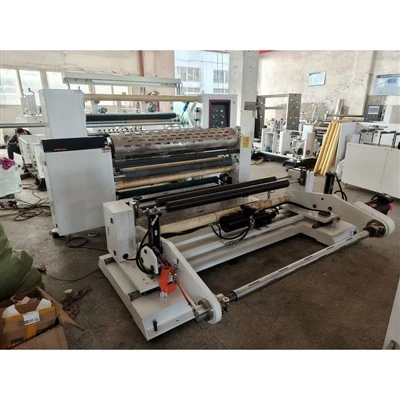
Let’s start with the basics: what a film slitter rewinder does, in practical terms. Raw packaging film comes in large master rolls—think 60 inches wide, 10,000 feet long, weighing thousands of pounds—manufactured at plants that focus on resin production, not the narrow, customized sizes needed for specific packaging jobs. A slitter rewinder takes those wide rolls, feeds them through sharp, precision-engineered blades to cut them into smaller, consistent widths, and rewinds them into neat, ready-to-use rolls for converters, brand owners, or end-of-line packaging teams. That sounds simple, but the nuances of how we design and build these machines directly impact every packaging application they serve.
One of the most widespread uses of slitter rewinders is in flexible packaging, the fast-growing segment that includes snack bags, frozen food wrappers, coffee pouches, and mailer envelopes. Flexible packaging relies on multi-layer films—often a combination of plastic, aluminum foil, and paper, laminated together for strength, barrier properties, and printability. These laminates are too thick, too delicate, or too wide to be used directly from the resin plant, so slitter rewinders are critical to tailor them to the exact width of a packaging machine’s fill tube. For example, a stand-up pouch for protein powder might need a 12-inch wide film roll, while a tiny snack bar wrapper needs a 2-inch roll. A good slitter rewinder uses shear blades (not round blades) to make clean cuts without tearing the multi-layer structure, which is essential to preserving the barrier that keeps powder fresh and moisture out. I’ve seen first-hand how a poorly adjusted slitter can create uneven edges on those small rolls, leading to jams on packaging lines, wasted materials, and delayed production runs. That’s why converters prioritize slitter rewinders that can handle thin, laminated films without defects.
Next, shrink film packaging—used for pallet wrapping, product bundling, and tamper-evident seals—depends heavily on slitter rewinder technology. Shrink film is made to stretch and conform tightly to a product when heat is applied, and its performance is tied directly to roll consistency. Master shrink film rolls are often 72 inches wide, and cutting them into narrower widths (for individual bottle wraps) or wider widths (for full pallet wraps) requires precise tension control. If a slitter doesn’t maintain consistent tension during rewinding, the finished rolls will have loose sections that cause uneven shrinking, or tight sections that tear during application. For tamper-evident seals, like those on medication bottles or food containers, slitter rewinders cut very narrow strips of film (sometimes as thin as 1 inch) that seal the bottle’s neck. Even a tiny defect in that strip—like a jagged edge or uneven thickness—can make the tamper seal break during shipping, leading to product returns and safety risks. Our clients in the pharmaceutical and food sectors specifically request slitter rewinders with closed-loop tension systems to ensure those narrow strips are uniform, because compliance with FDA and food safety standards depends on it.
Another key application is labeling and pressure-sensitive adhesive (PSA) tape. Labels are one of the most underappreciated uses for slitter rewinders, and not just for product labels—think the labels that stick to cans, jars, and shipping boxes, or the barcode labels that warehouses use for inventory. Label masters are 60 inches wide, with a paper or film base, adhesive layer, and silicone release liner on the back. Slitter rewinders cut these into narrow rolls, usually 1 to 4 inches wide, that feed onto label printing or applying machines. What many people don’t know is that label rolls require perfect alignment between the face film, adhesive, and liner to prevent “delamination” (where the label peels off the liner during application). Our slitter rewinders use a set of laser alignment tools to ensure cuts are straight, and we can adjust blade pressure to avoid cutting too deep (which would damage the liner) or too shallow (which would leave adhesive residue on the blade, causing buildup). For PSA tape, used in everything from packing tape to electrical insulation tape, slitter rewinders perform the same core task, but with even tighter tolerances. Electrical tape, for example, needs to be cut to exact widths to fit around wires, and any variation in width can lead to inadequate insulation, which is a safety hazard.
The corrugated and paper packaging segment also relies on slitter rewinders, though the machines here are often tailored to thicker materials. Corrugated sheets, used for shipping boxes, are die-cut and scored, but many converters need narrower strips of corrugated for things like protective edge guards, cushioning inserts, or retail display packaging. Slitter rewinders for paper and corrugated use score blades instead of shear blades, making a controlled indentation instead of a full cut, which prevents the material from splitting or tearing. This is especially important for edge guards, which need to bend without breaking to protect heavy products like furniture or electronics during shipping. We’ve worked with a number of corrugators that switched to our slitter rewinders for edge guard production, cutting their material waste by 15% because they can adjust cut widths to match exact product dimensions, instead of buying pre-cut strips that often have excess material.
Then there’s specialty packaging, a growing area that includes items like medical device packaging, beauty product wraps, and sustainable compostable films. Medical device packaging requires ultra-clean, defect-free rolls, because any particle or tear can contaminate a sterile device. Slitter rewinders for this sector operate in controlled, dust-free environments, and include features like air-knife systems to remove debris from the film surface during cutting. Beauty product packaging often uses thin, decorative films with high print quality, so slitter rewinders are designed to avoid stretching or warping the film, which would ruin the print. Sustainable films, made from plant-based resins like PLA or biodegradable polyethylene, are more delicate than traditional plastic films, so our slitter rewinders have adjustable blade speeds and tension controls to handle these materials without breaking. As more brand owners shift to eco-friendly packaging, the demand for slitter rewinders that can process these new, often tricky materials has skyrocketed—and that’s been a key focus for our engineering team over the last three years.
Beyond the product-specific applications, slitter rewinders also drive operational efficiency for packaging businesses. Many converters run 24-hour production lines, and a reliable slitter rewinder minimizes downtime from defects or jams. We’ve had clients tell us that switching from older, less precise slitter rewinders to our models reduced their downtime by 20%, because the finished rolls are more consistent and require fewer re-runs. Customization is another big factor: some clients need slitter rewinders that can handle variable widths and materials, so we build machines with modular blade systems that can be swapped in minutes, instead of having to re-calibrate the entire machine for a new job. For small to medium packaging operations, this flexibility means they can take on a wider range of jobs, from snack bags to medical labels, without investing in multiple machines.
I also want to address a common misconception I hear regularly: that any slitter rewinder will work for packaging. That’s simply not true. A slitter designed for industrial paper rolls won’t handle thin laminates, and a machine made for shrink film won’t process thick corrugated. The key is matching the slitter’s features to your specific materials and production goals. For example, if you’re working with thin, multi-layer laminates for flexible food packaging, you need a slitter with shear blades, closed-loop tension, and a dust extraction system. If you’re cutting narrow strips for tamper seals, you need a machine with high-precision blade alignment. Skipping that match can lead to wasted materials, production delays, and even compliance issues in regulated sectors like pharmaceuticals and food.
As a supplier, I’ve learned that the best slitter rewinders aren’t just about cutting film—they’re about understanding the end-use of the packaging they produce. That’s why we work closely with our clients, from small converters to large brand owners, to assess their needs: what materials they use, what sizes they need, what their production speed is, and any specific compliance requirements. We don’t sell a one-size-fits-all machine; we tailor our slitter rewinders to fit their operation, because that’s what drives long-term success.
If you’re in the packaging industry and looking to upgrade your film slitter rewinder, or if you’re a new operation looking for a machine that can handle your current and future needs, it’s important to partner with a supplier that understands both the technical side of slitter rewinder design and the unique demands of packaging applications. Whether you’re producing flexible snack bags, shrink-wrapped pallets, medical device packaging, or sustainable compostable films, a reliable slitter rewinder is an investment in consistent product quality, reduced waste, and smoother production runs.
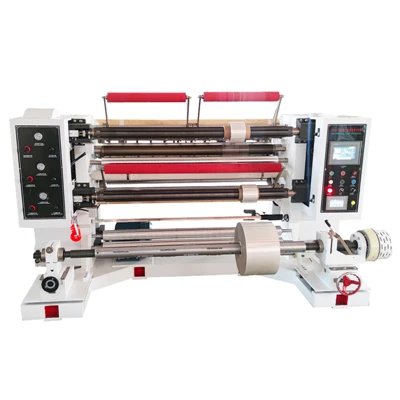
If you’re ready to learn more about how a film slitter rewinder can improve your packaging operations, feel free to reach out for a consultation. We’d be happy to discuss your specific needs, walk you through our machine options, and help you find the right solution for your business.
Rewinding Machine References
- The Packaging Association. (2022). Flexible Packaging Industry Report: Global Trends and Equipment Requirements.
- FDA Center for Food Safety and Applied Nutrition. (2021). Food Packaging Material Manufacturing Guidelines.
- Sustainable Packaging Coalition. (2023). Equipment Standards for Processing Compostable Packaging Films.
- Converters Association of North America. (2022). Slitter Rewinder Best Practices for Packaging Production.
- Medical Packaging and Sterilization Association. (2021). Sterile Packaging Defect Prevention Guidelines.
Wenzhou Sanhui Machinery Manufacturing Co., Ltd.
Wenzhou Sanhui Machinery Manufacturing Co., Ltd. is one of the most professional film slitter rewinder manufacturers and suppliers in China. We have world-leading production equipment and strong manufacturing capabilities. Please feel free to wholesale advanced film slitter rewinder made in China here from our factory. Customized orders are welcome.
Address: B17-8, Mechanical Industry Park, Wanquan Light Industry Production Base, Wanquan Town, Pingyang County, Wenzhou City, Zhejiang Province
E-mail: sanhui.slittingmachine@gmail.com
WebSite: https://www.sanhuislittingmachine.com/
