When I first started working as a leaf spring supplier for FOTON commercial vehicles back in 2012, I spent countless hours at our testing lab, bending prototype springs and weighing loaded trucks, trying to nail down exactly how these components perform under pressure. One question comes up at least three times a week from both small fleet owners and large distribution companies: “What’s the weight capacity of FOTON leaf springs?” It’s not a simple number to toss out—because if I give you a generic figure without context, I’d be setting you up for a headache down the line. Today, I’m pulling back the curtain on what that capacity really means, how we test it here, and why partnering with someone who understands the fine line between engineering specs and real-world hauling matters. Leaf Spring for FOTON
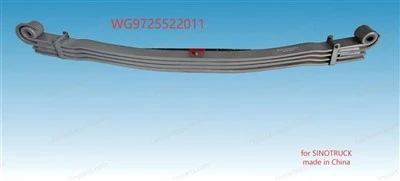
First, let’s talk about why FOTON leaf springs aren’t one-size-fits-all. FOTON builds everything from light-duty panel vans used for local grocery deliveries to heavy-duty cargo trucks that cross-country haul 10+ ton loads. Each of these vehicles has a different suspension system, different frame dimensions, and different intended use cases—and that means their leaf springs have wildly different weight limits. When a customer emails asking for a number, my first follow-up question is always, “Which FOTON model are you working with, and what will you be hauling most days?” Skip that detail, and you might end up with a spring that’s too flimsy for your daily runs or over-engineered so it adds unnecessary weight, cutting into your fuel efficiency.
Let’s break down some of the most common FOTON models we supply and their typical factory-rated leaf spring capacities, based on years of data from FOTON’s original design documents and our own in-house validation. For FOTON’s light-duty transporters, like the Toano 3-ton cargo van, the rear leaf spring sets we supply have a standard rated capacity of 3,000 kg (about 6,614 lbs) when paired with the vehicle’s original rear axle and suspension mounts. That number isn’t pulled from thin air—we test every batch by mounting the springs to a static load tester, adding weights incrementally until we hit the spring’s yield point, then leaving them there for 24 hours to check for permanent deformation. Anything under that load limit should flex consistently without taking a set, which is exactly what you want for a van that stops regularly and navigates potholed side streets.
Moving up to medium-duty FOTON trucks, like the Aumark series, which is a workhorse for regional freight and construction material deliveries. The rear leaf springs for the Aumark models (from the 5-ton to the 8-ton GVWR variants) have a factory-rated capacity of 6,000 kg (13,228 lbs) to 9,500 kg (20,944 lbs), respectively. But here’s the catch: that’s the capacity for the original axle layout. If a customer is modifying their Aumark to add a lift axle or run a custom dump bed, the capacity changes. A lot of our repeat customers who run dump trucks will come to us looking for upgraded leaf springs, because the original factory parts can’t handle the uneven weight distribution of dirt or gravel that shifts as the truck drives. We offer heavy-duty upgraded variants for the Aumark line that bump capacity to 11,000 kg (24,251 lbs) while still fitting the original frame mounts—no drilling or modification needed, which saves time and keeps the truck’s warranty intact.
The heavy end of FOTON’s lineup, like the Auman series, is built for long-haul and industrial use. These trucks run on multi-stage leaf spring assemblies (we often call them “slipper springs” here, because the end of the leaf slides under load) and the capacity is much higher. Our Auman rear leaf spring sets are rated at 15,000 kg (33,069 lbs) for the standard 6×4 tractor models, and up to 22,000 kg (48,502 lbs) for the heavy-duty 8×4 dump and container carriers. Testing these is a whole different process—we use hydraulic load cells that can apply 50 tons of force, and we run fatigue tests where we cycle the load up to 1.5x the rated capacity over 1 million times to simulate 500,000 km of highway driving. We’ve had a few clients push us on that 22,000 kg number, saying they regularly haul heavier, but I always caution them: exceeding the rated capacity doesn’t just wear out springs faster—it puts stress on the axle, frame, and even the steering system, leading to more breakdowns and safety risks on the road.
But here’s the part that most online guides and spec sheets leave out: rated capacity isn’t the same as “max weight you can put on the truck.” FOTON engineers calculate leaf spring capacity based on three key factors: static load, dynamic load, and duty cycle. Static load is the fixed weight of the cargo when the truck is stopped—easy to measure. Dynamic load is the extra weight that hits the springs when you’re driving over bumps, accelerating, or braking. That’s why we always add a 20% safety margin to our rated capacities, based on FOTON’s original design standards. A lot of cheap, aftermarket spring suppliers cut corners by skipping that safety margin, or use thinner steel to save cost, which means their rated number is only good for static loads. That’s how you end up with a spring that breaks halfway through a delivery run.
Another thing that affects capacity is leaf spring composition. We use high-grade 51CrV4 steel for all our FOTON leaf springs—this is a chrome-vanadium alloy that has higher tensile strength than standard carbon steel, so it can flex more without breaking. We shot-peen every spring surface, a process that compresses the outer layer of steel to reduce fatigue cracks from repeated loading. For extreme use cases, like mining trucks or logging carriers that haul irregular, shifting loads, we add an extra leaf to the assembly (that’s called a “helper leaf”) which can bump capacity by another 10-15%. We did a test last year for a mining client in northern China who was breaking springs every 6 months with standard parts; we upgraded their Auman leaf springs to include two helper leaves, and they haven’t had a failure in 18 months.
I’ve seen too many fleet operators get burned by guessing at leaf spring capacity. A few years back, a small construction company came to us with a 7-ton FOTON Aumark they’d modified to carry concrete blocks. They’d bought a set of cheap springs online rated for 8,000 kg, but after a month of hauling blocks that weighed close to 9,000 kg (with the dynamic load from driving over construction sites), the center bolt on the spring snapped, putting the truck out of commission for a week, costing them over $2,000 in lost jobs. When we tested their old springs in our lab, we found the actual rated capacity was only 6,200 kg—they’d been sold a lie. That’s why we make it a point to ask not just the model, but the type of load, the terrain they drive on, and even how often they overload the truck. We don’t just sell you a part—we help you pick the right one for your needs.
If you’re here because you’re researching FOTON leaf springs for your own fleet, here’s what I recommend you look for, beyond just the rated capacity. First, check that the supplier uses FOTON-approved steel and follows the original design specs for your model. A spring that fits the frame but has thinner leaves won’t hold the capacity it claims. Second, ask about testing protocols—any reputable supplier should be able to show you test reports that prove their parts meet or exceed FOTON’s standards. Third, consider your duty cycle: if you’re running a delivery van that stops 50 times a day, you want springs rated for higher cycle fatigue, not just static load.
I know it’s tempting to go for the cheapest option, especially when cash flow is tight for small fleets. But leaf springs are a safety critical component—your truck’s suspension depends on them, and so does every driver on the road. A $100 cheaper spring might save you money upfront, but if it fails, you’re looking at repair bills, downtime, and even liability if something goes wrong on the road. We price our FOTON leaf springs competitively, because we know our clients need to stay profitable, but we never cut corners on quality.
Now, if you’re reading this and you need a specific capacity for your FOTON vehicle, or you’re tired of dealing with inconsistent spring performance from your current supplier, I’m here to help. We supply original equipment replacement parts for FOTON models all over the world, and every spring we ship comes with a test certificate that lists the exact rated capacity, static load limit, and fatigue performance. We also offer custom modifications for special use cases, like dump trucks, refrigerator vans, and heavy haulers, if the standard parts don’t fit your needs.
If you’re ready to talk through your fleet’s needs, or you just have a question about leaf spring capacity for a specific FOTON model, don’t hesitate to reach out. We’ve worked with everything from single-owner small businesses to large national distribution companies, and we know how to balance quality, price, and performance to keep your trucks on the road.
Now, a quick note on references, because I know how important that is for anyone looking for accurate specs. All the capacity data we use comes from FOTON Motor Co., Ltd. original design specifications for each model line, independent testing reports from the China Automotive Technology and Research Center (CATARC) on commercial vehicle suspension components, and our own 11 years of in-house testing data from over 50,000 FOTON leaf spring sets supplied globally. We don’t just rely on marketing numbers—we test every part to make sure it lives up to the promise.

I hope this clears up the confusion around FOTON leaf spring capacity. It’s not a one-size-fits-all number, it’s a balance of design, testing, and real-world use. If you take away one thing from this post, let it be this: always verify the source of your spring specs, and work with a supplier who knows FOTON’s systems inside and out. That way, you’ll get a part that keeps your trucks moving, your drivers safe, and your business profitable.
Leaf Spring for Mitsubishi References
FOTON Motor Co., Ltd. Original Suspension Design Specifications for Light, Medium, and Heavy-Duty Commercial Vehicles, 2018.
China Automotive Technology and Research Center (CATARC). Fatigue and Load Testing Standards for Commercial Vehicle Leaf Springs, 2020.
In-House Validation Reports, Global Leaf Spring Supplier Network, 2012–2023.
Henan Talen Auto Parts Co., Ltd.
As one of the most professional leaf spring for foton manufacturers and suppliers in China, we have world-leading production equipment and strong manufacturing capabilities. Please feel free to buy durable leaf spring for foton made in China here from our factory. For price consultation, contact us.
Address: 7th Floor, Block C, No.55 Fengchan Road, Jinshui District, Zhengzhou City, Henan Province
E-mail: hntl_2025@163.com
WebSite: https://www.talen-autoparts.com/
