Hey everyone, if you’ve ever stood back and watched a construction crew hoist a crew 100+ feet up to finish a steel beam weld or a building’s exterior cladding, you’ve probably wondered: just how tall can these boom lift trucks actually go? As a boom lift truck supplier who’s worked with everything from small-town remodel jobs to big-city skyscraper projects for the last 12 years, I get that question all the time—and it’s not a silly one. The tallest boom lift you can get right now isn’t just a number; it’s a game-changer for jobs that would’ve required cranes or scaffolding a decade ago, and trust me, there’s way more to it than just “how high can it reach.” Boom Lift Truck
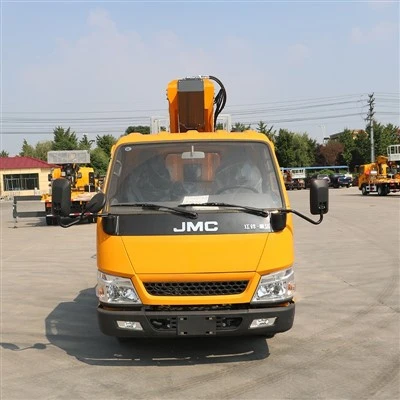
First off, let’s cut through the jargon because I know a lot of folks get confused between articulating booms, telescopic booms, and what even counts as a “truck-mounted” lift. A lot of people mix up self-propelled boom lifts (the ones you drive around on a construction site without a truck base) with boom lift trucks—this is the stuff mounted on a commercial truck chassis, right? It’s the kind you see on highways, the ones that can drive to a job site, set up, and go straight to work instead of needing a separate transport truck. That’s the line we’re sticking to here.
Now, to the big question: what’s the tallest? As of 2024, the crown goes to the JLG 1850SJ, but wait—hold up, that’s a self-propelled model, not a truck mount. The truck-mounted equivalent that’s actually road-legal for most North American highways? That’s the Versalift VST-110-I. Yeah, you read that right: 110 feet. But before you go “that’s it?” let’s break down why that number matters, and why there’s a reason you won’t find a 200-foot boom lift truck you can just drive down the interstate.
Here’s the thing: highway regulations are non-negotiable for truck-mounted lifts. Most U.S. states and Canadian provinces cap the total height of a commercial vehicle at 13.5 feet to 14 feet when it’s not in use. If you build a boom that goes higher, you’ve got to fold it down so tight it doesn’t stick above that height limit. The VST-110-I hits that sweet spot: when it’s stowed, it’s only 13.8 feet tall, which is legal almost everywhere, no extra permits needed. Try to go taller than 110 feet, say 120 feet? The boom has to be way longer when extended, which means it needs a bigger, heavier truck chassis to support it—and suddenly you’re looking at a vehicle that can’t navigate narrow city streets, weighs so much it needs extra axle permits, and costs a fortune to operate.
Wait, but let’s confirm that. A lot of contractors ask about electric vs. diesel too, right? The VST-110-I is diesel, which is standard for boom lift trucks because you’re powering the hydraulic system for the boom, not just the truck’s engine. For indoor jobs or residential projects, you’ll see electric booms, but for heights over 80 feet, diesel is the way to go—more torque, no risk of dead batteries mid-job.
Now, let’s talk about what makes a tall boom lift actually useful, not just a number on a spec sheet. The VST-110-I isn’t just 110 feet up; it has a horizontal reach of 56 feet. That’s huge because if you’re working on a skyscraper’s 80th floor, you don’t just need to go straight up—you need to reach out over a sidewalk, or around a building’s corner, or hold a crew while they repair a sign on the side of a mall that extends 40 feet out from the wall. I’ve seen jobs where a 120-foot articulating boom (the kind with hinges, not a straight telescopic pole) saved a crew two weeks of scaffolding time. But that 120-foot unit? It’s not road-legal. It can only be transported on a lowboy trailer, which adds cost and time to every move. For most general contractors, electrical utility companies, and building maintenance crews, that extra hassle isn’t worth it.
Let’s get real: what jobs actually need a 110-foot boom lift? Let’s list them. First, utility work: replacing power lines on tall poles, trimming tree branches along highway right-of-ways, even installing streetlights in urban areas. A lot of people don’t realize that utility crews don’t just use cranes for that—boom lift trucks are way more maneuverable around power substations and residential neighborhoods. Then there’s building facade work: cleaning skyscraper windows, installing siding on high-rise condos, repairing LED billboards that are mounted 100 feet up. Last year, we rented a VST-110-I to a team doing renovations on the Chicago Riverwalk’s overhead structure; without that lift, they would’ve had to set up scaffolding that took three days to build and another three to take down. The lift got them up in 2 hours, and they finished the job a full week early.
Now, why aren’t there taller truck-mounted lifts on the market? Let’s talk weight and stability for a second. A truck-mounted boom lift’s stability comes from its outriggers—those metal legs that extend out from the base when it’s set up. The VST-110-I has four outriggers that extend 12 feet on each side, so it’s not going to tip over in 20 mph winds (which is a OSHA requirement, by the way—you can’t operate a boom lift in winds over 28 mph for units over 50 feet). If you make the boom longer, you need heavier outriggers, a bigger truck, and the whole rig ends up weighing 80,000 pounds or more. Most highway bridges have a 80,000-pound weight limit for commercial vehicles, so you hit another regulatory wall there. Plus, the cost: a VST-110-I runs about $180k new, which is half the cost of a 120-foot road-legal boom lift. For small to mid-sized companies, that’s a no-brainer.
Wait, let’s clear up a common mix-up: telescopic vs. articulating booms when we’re talking tall. The VST-110-I is a telescopic boom, meaning it extends straight out like a giant telescope. Articulating booms are better for jobs where you need to “reach around” obstacles—like if you’re working on a building that has a setback, or a tree that’s in the way. But for pure height, telescopic is the way to go, and that’s the type you want for 100-foot jobs. We actually keep both in our fleet: a few telescopic units for utility and high facade work, and some articulating units for smaller spots.
Another thing a lot of people don’t think about: lift capacity. The VST-110-I can carry up to 500 pounds in its basket. That’s enough for two crew members and their tools, which is perfect. A lot of taller, non-road-legal booms might have a lower capacity, which means you can’t bring extra supplies up with you—you have to send someone back down every time you need a new bolt or a tool. For most jobs, 500 pounds is all you need, so again, that 110-foot mark hits a sweet spot between height, capacity, and portability.
Let’s address some myths too. I’ve had customers ask me, “Can I use a 110-foot boom lift to work on a 120-foot building?” The short answer is: maybe, but with a catch. The OSHA requirement is that your lift has to reach at least 10 feet above the work area, so if you’re working on the 100th floor of a 110-foot building, you need a boom that goes to 120 feet. But again, that’s a non-road-legal unit. So we tell customers: if you’re regularly working on buildings over 100 feet tall, you might want to look at a self-propelled 1850SJ, which can fit through standard doorways, drive on the job site, and reach 185 feet. But if you need to move that lift from job to job every week, on public roads, the VST-110-I is the only game in town.
Wait, that’s a key point I almost missed: self-propelled booms are great, but they can’t go on highways. If your next job is 50 miles away, you either have to trailer the self-propelled lift (costing $150 a move) or drive the truck-mounted lift there directly. For most construction and utility companies, that’s the difference between a profitable job and a losing one. So the truck-mounted tall boom? It’s not just about height—it’s about flexibility.
Now, let’s talk maintenance, since I’m a supplier, that’s a big part of what we help customers with. Taller boom lifts have more moving parts, more hydraulic hoses, and more areas that can wear out. The VST-110-I’s boom is made of high-strength steel, so it’s built to take the torque of extending 110 feet, but we still do a full inspection every time a unit comes back from a job. We stock all the replacement parts right here, so if you have a breakdown on a job site, we can have a technician there in 24 hours. That’s something a lot of big national suppliers don’t offer—they make you wait for parts from across the country, but we’re local, so we get you back up fast.
Let’s wrap this up for anyone who’s still on the fence. If you’re a utility company working on highway power lines, a contractor doing high-rise facade work, a building maintenance crew fixing signs or windows, or anyone who needs a lift that can go high and move easily between job sites, the tallest boom lift truck you can get right now is the Versalift VST-110-I. Is there a chance that will change in the next few years? Maybe. Companies like JLG and Versalift are always testing higher units, but right now, regulatory limits and practicality mean 110 feet is the sweet spot for road-legal, truck-mounted boom lifts.
But here’s the thing: height isn’t everything. We’ve had customers who come in asking for the tallest lift they can get, only to find out they actually don’t need 110 feet—they only need 60, so a smaller, cheaper, more maneuverable unit is better. That’s why we never just sell someone a VST-110-I without walking through their job details. We ask: how far do you need to reach? How often do you move between job sites? How much weight do you need to carry? Those questions matter way more than the number on the spec sheet.
If you’re planning a project that needs a tall boom lift, or you’re just looking to upgrade your fleet, don’t guess on what you need. Hit us up to chat through your requirements—we can walk you through all the options, from the 110-foot truck mount to smaller units that fit narrow streets. We’re not just here to sell you a lift; we’re here to make sure you get the right one for your job, so you don’t waste time or money on something too big or too small.
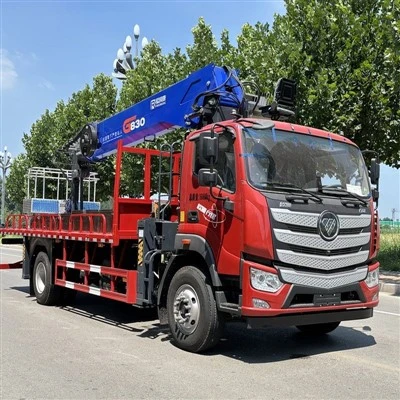
And if you want to check the specs for yourself, that’s easy too—we can point you to the official manufacturer docs for the VST-110-I, but don’t just take the numbers at face value. Talk to someone who uses them every day. I’ve seen guys use that lift to replace power lines in a snowstorm, and others use it to clean skyscraper windows in the middle of a city. It’s versatile, it’s road-legal, and it’s the tallest you can drive straight to a job site right now.
Boom Lift Truck References
- Occupational Safety and Health Administration (OSHA) standards for aerial lift vehicles, 2023
- Versalift VST-110-I Product Specifications, 2024
- American Trucking Associations (ATA) Commercial Vehicle Height and Weight Regulations, 2024
- JLG Industries Inc. Aerial Lift Product Line Overview, 2024
- National Utility Contractors Association (NUCA) Equipment Usage Survey, 2023
Jining Baoliwei Construction Machinery Sales Co., Ltd.
Jining Baoliwei Construction Machinery Sales Co., Ltd. is one of the most reliable boom lift truck manufacturers and suppliers in China, featured by quality products and good price. Please rest assured to buy durable boom lift truck made in China here from our factory. Customized orders are welcome.
Address: South of Provincial Highway 338, west of Jiacheng Road, Jining Economic Development Zone, Jining City, Shandong Province, China
E-mail: 17853735607@163.com
WebSite: https://www.baoliweicrane.com/
