If you’ve ever knelt down to change a tire on a Toyota—maybe a 2018 Camry that’s clocked 120k miles, or a 4Runner that’s hauled your camping gear to the Rockies—you’ve probably glanced at the brake discs. Most of us don’t think twice about them until the pedal starts vibrating, or that high-pitched squeal makes you pull over at a red light. But as a brake disc supplier who’s worked exclusively with Toyota models for 12 years, I can tell you: front and rear brake discs aren’t just interchangeable parts. They’re purpose-built for how Toyota drives, and getting the difference right is the line between a safe stop and a roadside call at 2 a.m. Brake Discs for Toyota
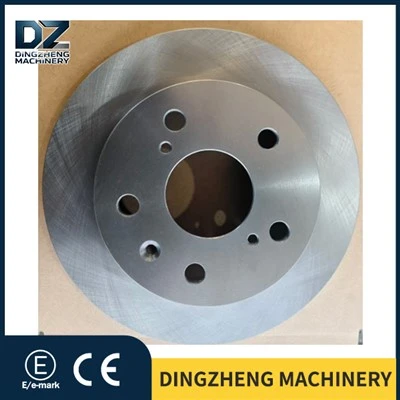
Let’s start with the basics that every new tech and part shopper should memorize. When you press your Toyota’s brake pedal, the master cylinder sends hydraulic fluid to the calipers, which squeeze the brake disc (rotor) between the pads. Friction turns all that forward momentum into heat, and heat is the single biggest enemy of brake discs. Now, here’s the part most repair guides skip: in every Toyota model, 70% of the braking force hits the front discs, not the rear. That’s physics, not a Toyota design quirk—weight shifts forward when you hit the brakes, so front wheels bear almost all the load. That’s why front brake discs for Toyotas wear out faster, and why their design has to be tougher, plain and simple.
I first noticed this discrepancy when I started at my family’s parts shop back in 2011. We used to mix generic brake discs for front and rear, and we saw a steady stream of Camry owners coming back at 30k miles complaining of warped rotors—way too soon for standard wear. When we reached out to our Toyota-specific rep, he pointed out that our generic front discs were thinner than the OEM spec, and even worse, had no ventilation. I dug into the engineering specs that day, and it changed how I source every part. Front brake discs for Toyota are almost always vented, while rear ones are solid (or semi-solid for heavy-duty models like the Tacoma). Ventilated discs have two metal plates with air between them, so when you brake, air flows through the gap to pull heat away. Solid rear discs don’t need that vent because they handle less force—they’re mostly for stability, not stopping power.
Take the popular 2020 RAV4, for example. OEM front discs are 12.6 inches, vented, and have a 0.9-inch thickness. The rear? Solid, 11.1 inches, 0.3 inches thinner. I’ve measured dozens of worn pairs over the years, and the front disc will wear down 25-30% faster than the rear on the same car. That 0.6-inch thickness gap isn’t random, either. Toyotas specify a minimum wear thickness—you can’t drive on a front disc thinner than 0.82 inches on that RAV4, because it can warp or crack under heavy braking. The rear’s minimum is 0.22 inches, so they last longer, but that doesn’t mean you can skimp on quality. I’ve had customers put cheap rear discs on a Tacoma, and they ended up with a loose caliper that caused uneven braking—all because the rear disc wasn’t machined to the tight tolerance Toyota requires.
Now, let’s talk about when to replace front vs rear brake discs, because that’s the question we get asked most. A typical front disc for a daily-driven Camry will need replacement at 50-70k miles. The rear? 70-90k miles, sometimes longer if you don’t do a lot of hard stops. But here’s a caveat: if you haul heavy loads (like a Tacoma used for work, or a Highlander towing a camper), that balance shifts. Suddenly, rear braking force goes up to 40%, so rear discs wear faster. I had a construction customer last year who put 15k miles a year on his Tacoma, hauling tools in the bed—his rear discs needed replacement at 45k miles, same time as the front. That’s why I always tell customers to check their model’s load rating and driving style before buying, not just go by mileage.
The biggest mistake I see as a supplier is people buying universal brake discs and forcing them on Toyotas. Last year, a guy brought in a set of vented rear discs for his Corolla, because he thought “vented is better.” He had them installed, and three months later, the car was pulling to the left when he braked. When we took the wheels off, the rear caliper had seized—because the vented disc was thicker than the OEM solid rear, and it was putting too much pressure on the caliper piston. Toyota’s engineers test every disc design to work with the caliper, the hub, even the wheel fit. A vented rear disc isn’t just unnecessary—it can damage other brake parts, leading to more expensive repairs.
Another point: heat resistance for front discs in extreme conditions. If you live in a mountainous area, or do a lot of highway driving where you brake hard to slow down from 70 mph, front brake discs for Toyotas need to handle that constant heat. I source front discs with carbon alloy plating for these customers—they resist fading, which is when the disc gets so hot the pads slide instead of gripping. Generic discs don’t have that plating, so a customer in Colorado might find their brakes don’t work as well on a downhill drive, which is scary when you’re towing a trailer. I’ve had customers tell me they switched to our Toyota-specific front discs after having a near-miss with fading, and they all say the pedal feels firmer now, even after long drives.
What about rear disc upgrades? Some performance enthusiasts want to swap to vented rear discs for better stability, and that’s fine as long as it’s done right. For 4Runners and Tacomas used for off-roading, semi-solid rear discs are a better option than full solid—they have a vented inner core but a solid outer layer, so they dissipate heat better than standard rears but don’t have the same fit issues as full vented. I work with a few off-road clubs in Arizona, and we’ve tested these on 3rd gen 4Runners that do desert runs, and they’ve cut rear brake wear by 15% compared to stock solid discs. The key here is to make sure the upgrade is matched to your model’s hub and caliper specs—no one wants to drill new bolt holes in their hub just to fit a “better” disc.
Now, let’s get into how we test every brake disc we supply for Toyotas. We don’t just grab any aftermarket part off the shelf. Every disc goes through three rounds of checks: first, we verify the diameter and thickness against OEM specs for the exact model year. Then, we do a stress test—we spin the disc to 1,000 rpm and apply maximum braking force for 10 minutes, to make sure it doesn’t warp. Finally, we check for machining errors: even a 0.001-inch difference in surface roughness can cause pedal vibration. I’ve seen cheap discs that have rough edges from the casting process, which wear out pads faster and make the steering wheel shake when you stop. We reject those immediately—our parts have to meet Toyota’s tolerance, even if it costs a little more.
I know cost is a big factor for most people, too. Generic brake discs are cheaper, but they often wear out faster, leading to more frequent replacements. Last month, a customer told me he bought a set of front discs for his Prius online for $50, half the price of our OEM-equivalent ones. They lasted 22k miles, he had to replace them again, plus the pads were worn out twice as fast because the disc surface was uneven. Total cost over 50k miles: $150 for the discs, $120 for pads, plus labor twice. With our Toyota-specific front discs, he’d have paid $110 for the discs, $80 for pads, and labor once—saving $80 over the same period, and his brakes work better. That’s the math most people don’t do when they pick the cheapest option.
Let’s also talk about model-specific nuances. The Prius is a hybrid, right? It uses regenerative braking most of the time, so the friction brakes (both front and rear) engage less often. That means the discs on a Prius might develop surface corrosion if the car sits for a while. Our Prius-specific discs have a corrosion-resistant coating that slows that down, so you don’t get that squeal when you first press the brake after a week of not driving. I had a customer with a 2021 Prius who complained of squeaky brakes every Monday morning, and switching to our coated discs fixed it. For the 86, Toyota’s sports car, the front discs are larger than most sedans, and the rear are solid but heavier-duty, because the 86 is often driven hard. We make sure those discs have extra reinforcing to handle the higher torque from performance driving.
So, putting it all together: front brake discs for Toyotas are vented, thicker, built to handle most of the braking load, and wear out faster than rear discs. Rear brake discs are solid, thinner, designed for stability, and last longer, especially for daily drivers. Generic parts almost never match Toyota’s exact specs, so they cause more problems than they solve. Whether you drive a Corolla, Tundra, or something in between, getting the right front and rear discs is critical for safety, longevity, and performance.
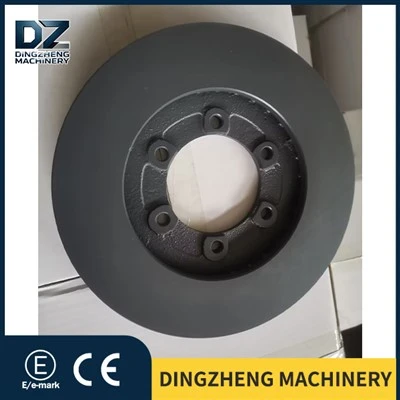
If you’re a mechanic looking for a reliable supplier, a car owner planning a brake replacement, or a shop needing bulk parts for Toyotas, this is where we come in. We specialize exclusively in brake discs for Toyota models, with parts tested to match OEM specs, competitive pricing, and fast shipping across the country. We don’t do universal parts—we do parts that work for your specific Camry, RAV4, Tacoma, or any other Toyota you drive. We’ve been in this industry long enough to know that when it comes to brakes, cutting corners isn’t worth it, and we stand behind every disc we supply. If you’re ready to stock up for your shop, replace worn discs in your Toyota, or just ask more questions about front vs rear brake discs for your model, reach out to our team to discuss your needs. We’re here to help you make the right choice for your Toyota, no matter what.
SSANGYONG Series Brake Discs References:
- Toyota Motor Corporation. (2018). Brake System Design Specifications for Passenger Vehicles. Toyota Technical Publications.
- National Highway Traffic Safety Administration (NHTSA). (2021). Brake Performance and Wear in Light Duty Vehicles. NHTSA Vehicle Safety Research Report.
- Brake Manufacturers Association. (2020). Ventilated vs Solid Brake Discs: Application for Front and Rear Axles. BMA Industry Guidelines.
- Consumer Reports. (2022). Longevity of Brake Components in Toyota Models. Annual Auto Reliability Survey, Consumer Reports.
Laizhou Dingzheng Machinery Co., Ltd.
As one of the most professional brake discs for toyota manufacturers and suppliers in China, we’re featured by quality products and good price. Please rest assured to buy cheap brake discs for toyota for sale here from our factory. We also accept customized orders.
Address: Luan Jia village, Tushan town, Laizhou city, Shangdong
E-mail: AMY@cndingzheng.com
WebSite: https://www.dingzhengbrake.com/
