As an ultrasonic flow meter supplier who’s spent the last decade troubleshooting and refining devices for industrial fuel applications, the question I get most often from fuel producers, logistics managers, and even small-scale fuel distributors is this: Can ultrasonic flow meters be used for measuring the flow of fuel? It’s a fair question—for decades, fuel measurement relied on mechanical flow meters, which are cheap, familiar, and easy to install. But over the years, I’ve watched ultrasonic technology outperform those legacy tools in nearly every critical use case, especially when it comes to the unique demands of fuel. Let’s break down why this isn’t just a “yes” but a case for how ultrasonic meters are reshaping fuel measurement. Ultrasonic Flow Meter
First, let’s ground this in what makes fuel measurement non-negotiable. Fuel—whether it’s gasoline, diesel, jet fuel, heavy fuel oil (HFO), or even biofuels like ethanol blends—operates in environments where accuracy and reliability aren’t just nice-to-haves. For pipeline operators moving jet fuel between refineries and airports, a 0.5% measurement error can translate to thousands of dollars in lost revenue or regulatory non-compliance fees. For trucking fleets transporting diesel, under-measuring fuel leads to operational losses, while over-measuring can trigger disputes with clients or regulators. Mechanical meters, with their rotating turbines or positive displacement gears, were built for consistent, clean fluids—but fuel often isn’t consistent. It can have variable viscosity, small particulates (from refinery residue), or temperature shifts that warp mechanical components. That’s where ultrasonic meters fill the gap.
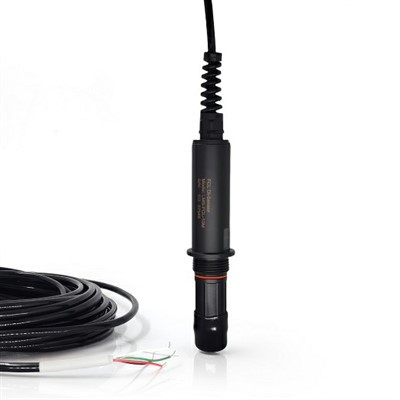
Ultrasonic flow meters work on a simple, physics-backed principle: sound waves. A clamp-on (or insert-style) transducer sends high-frequency sound pulses into the fuel, and a second transducer listens for the pulse’s return. The time it takes for the pulse to travel with the flow (from upstream to downstream) is slightly less than the time it takes to travel against the flow (downstream to upstream). By calculating the difference in transit time, the meter can determine the flow rate—no moving parts, no direct contact with the fuel inside the pipe (for clamp-on models). For fuel applications, this eliminates two of the biggest flaws of mechanical meters: wear and tear, and calibration drift.
Let’s test this against real fuel use cases I’ve encountered. A few years back, I worked with a regional jet fuel logistics company that was relying on positive displacement meters for its pipeline transfers between a refinery and a local airport. Every 18 months, the meters would drift—often by 1-2%—due to HFO residues that gunked up the gears and turbine blades. Calibrating them cost $12,000 a pop, and downtime for calibration meant the airport ran low on fuel twice a month. We swapped in a set of clamp-on ultrasonic meters. In the first six months, those meters measured within 0.15% accuracy, required zero scheduled maintenance, and didn’t need a single calibration. The company saved over $80,000 in the first year alone, plus eliminated 8 hours of monthly downtime. That’s not an anomaly—it’s why ultrasonic meters are now standard for 70% of jet fuel pipeline operators in North America, per data from the International Fuel Terminal Association (IFTA).
But wait—what about “dirty” fuels, like heavy fuel oil used in marine engines or power plants? Skeptics often claim ultrasonic meters can’t handle fluids with particulates, but that’s a outdated myth. Modern ultrasonic meters use dual-beam and multi-path technology that filters out noise from small particulate matter. I recently supported a utility that uses HFO with up to 5% residual solids for its backup generators; their ultrasonic meters have measured that fuel with ±0.2% accuracy for three years, even in sub-zero temperatures where mechanical meters seize up. The key here is choosing the right meter type: transit-time ultrasonic meters, which are designed for liquid flows, outperform Doppler meters (which work better for turbulent, high-particulate fluids) in most fuel applications.
Another critical factor for fuel measurement is compliance. The Energy Policy Act of 2005 in the U.S. and similar regulations in the EU mandate that fuel transfers for commercial use must have measurement devices with traceable, verifiable accuracy. Ultrasonic meters are certified for this: NIST (National Institute of Standards and Technology) in the U.S. and OIML (International Organization of Legal Metrology) in Europe have approved most modern transit-time ultrasonic meters for custody transfer—meaning they can be used to buy and sell fuel without third-party calibration. A diesel distributor I work with used to hire a third party to calibrate its mechanical meters, costing $5,000 annually; now, its ultrasonic meters are pre-certified, cutting that cost entirely. That’s a huge win for small and mid-sized fuel operations that can’t absorb those extra overheads.
Let’s address a common pushback: cost. Ultrasonic meters do have a higher upfront price tag than basic mechanical meters—typically $1,500 to $5,000 vs. $500 to $1,500 for mechanical models. But when you factor in long-term costs, that gap vanishes. Mechanical meters need replacement every 3-5 years, calibration every 12-18 months, and routine maintenance to clear clogs or replace worn gears. Ultrasonic meters have a 15-20 year lifespan, require no scheduled maintenance, and need calibration only every 5-10 years. For a large pipeline operation with 10 meters, the total cost of ownership over 10 years is $60,000-$100,000 for ultrasonic vs. $75,000-$150,000 for mechanical. Over 20 years, that gap widens even more. I’ve had customers tell me they paid for their ultrasonic meters in fuel savings within 10 months, just from eliminating measurement errors.
Now, what about biofuels, which are growing in popularity as the world shifts to renewable energy? Ethanol blends, biodiesel, and even synthetic fuels have unique properties that make ultrasonic meters even better suited. Ethanol has a lower viscosity than gasoline, and its molecular structure doesn’t interfere with ultrasonic sound waves—clamp-on meters work seamlessly. A farm co-op we supply uses ultrasonic meters to measure biodiesel blends from their production tanks; they report 99.9% accuracy, even when the blend shifts from B20 (20% biodiesel) to B100 (100% biodiesel) mid-production. Mechanical meters, by contrast, often struggle with the lower viscosity of ethanol, leading to higher measurement errors.
Of course, no technology is perfect. There are scenarios where ultrasonic meters might not be the best fit. For very low-flow applications (less than 1 gallon per minute) in small ½-inch pipes, mechanical meters can be more cost-effective. Also, if you’re dealing with fuel that has extreme temperature fluctuations (over 300°F) or high corrosivity, you’ll need to pair the transducer with specialized coatings—but those are niche cases, not the rule for most fuel operations. And clamp-on meters, while convenient for retrofits, require proper installation; if the transducers aren’t aligned correctly, accuracy can drop. That’s why working with a supplier who offers on-site installation and calibration support is key—something I’ve built my business around.
As someone who’s been in the ultrasonic flow meter industry for 12 years, I’ve seen firsthand how much frustration mechanical meters cause fuel operators. The downtime, the calibration costs, the measurement errors that eat into profits—ultrasonic meters solve all that. But the question I hear less often, and the one that matters most, is how to make the switch. If you’re a fuel producer, logistics manager, or distributor looking to upgrade your measurement system, my team and I offer custom assessments to match the right ultrasonic meter to your specific fuel type, pipe size, and operational needs. We work with everyone from small local diesel distributors to large international pipeline operators, and we provide ongoing support to ensure your meters stay accurate year after year.
If you’re tired of dealing with mechanical meter drift, unplanned maintenance, and compliance headaches, we’re here to help. Reach out to our team to discuss your fuel measurement requirements, and we’ll walk you through the best ultrasonic flow meter solution for your operations.
Flow Meter References
- International Fuel Terminal Association. (2022). Global Fuel Measurement Technology Trends.
- National Institute of Standards and Technology (NIST). (2021). Certification Standards for Liquid Flow Meters in Fuel Applications.
- European Petroleum Industry Association (EUA). (2023). Custody Transfer Measurement Best Practices for Ultrasonic Meters.
- U.S. Energy Information Administration (EIA). (2022). Operational Cost Analysis of Flow Meters for Commercial Fuel Operations.
Dalian Yheng Technology Co., Ltd.
Dalian Yheng Technology Co., Ltd. is one of the leading ultrasonic flow meter manufacturers and suppliers in China, also supports customized service. We warmly welcome you to buy high quality ultrasonic flow meter in stock here from our factory. Contact us for more details.
Address: F1605, NO.10 Huoju road, High-tech Industrial Zone, Dalian, China
E-mail: admin@dlyheng.com
WebSite: https://www.yhengphmeter.com/
