Hey there, fellow school admins, teachers, and maybe even tired parents who’ve watched their kid hunch over a desk that’s way too short or tall – let’s talk desk legs. As someone who’s been in the school desk game for years, I’ve seen it all: desks too low that make kids crane their necks like owls, desks so high they’re propelling themselves up on tiptoes to reach their work. The good news? Adjusting a school desk’s leg height isn’t rocket science, and getting it right makes such a huge difference for posture, focus, and even how much kids actually want to sit there. I’ve helped hundreds of schools tweak their desks over the years, and today I’m spilling all the real, practical tips I’ve picked up – no fancy jargon, just stuff that works for busy people running classrooms. School Desk
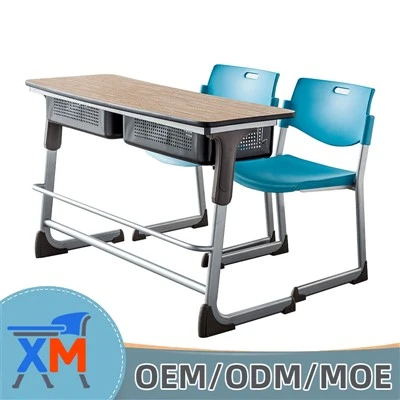
First off, let’s get one thing straight: not all adjustable desks are created equal. A lot of schools go cheap on desks that have wobbly, flimsy legs that slip after a month, or adjustment mechanisms that are so complicated no one bothers to use them. If your current desks are the kind where you have to bang a pin with a hammer to shift the leg height? Yeah, that’s a headache waiting to happen. The best ones have quick, smooth adjustments – like levers you squeeze, or knobs you twist without tools – because when a teacher has to adjust 30 desks for different grades, they don’t have time for a 10-minute fight with each one. That’s the first step: making sure your desk legs are actually adjustable in a way that’s user-friendly. I always tell schools, if your current desks are a pain to adjust, maybe it’s worth upgrading to something with better hardware – trust me, the long-term headache (and strain on your back from wrestling desks) isn’t worth saving a few bucks upfront.
Now, how do you figure out what height each desk should be? It’s not just guessing or going by “that kid looks about 10.” There’s a simple science here, and I’m gonna break it down so you don’t need a degree to get it right. The golden rule I use with every school is this: when a student is sitting up straight (no slouching, feet flat on the floor, elbows bent at a 90-degree angle when their arms are resting on the desk surface), the desk height should be right at the bend of their elbows. Wait, let me say that again – no floating feet, no craning arms. If their feet hang off, the desk’s too high. If their elbows have to hunch up to rest on the desk, it’s too low. That’s it.
But here’s the thing: kids grow like weeds, especially in elementary and middle school. I’ve had 2nd graders who were the size of 5th graders, and 5th graders who still had little legs dangling. So don’t just set all desks to one height for a grade level – split them into small, medium, large for each class. A 2nd grader’s small desk needs to be way lower than a 5th grader’s large one, even if they’re in the same room. I once had a 4th grade teacher who tried to make all her desks “sort of work” for everyone, and by mid-year, half her class had complained about shoulder pain. We went through and labeled each desk with its height, then matched it to every kid’s size, and she came back a month later saying the behavior issues (from fidgeting because they were uncomfortable) dropped a ton. That’s how small this stuff is.
Okay, so once you know the right height, how do you actually adjust the legs without breaking anything or making it wobbly? Let’s cover the two most common types of adjustable desk legs, because the process changes a little depending on what you’ve got. First, the pin-style legs – these are the ones with holes along the leg, and a metal pin that locks into place. I know, some of these still require a little force, but there’s a trick to it. First, make sure the desk is empty – no books, no backpacks, no lunch trays, because extra weight will make the leg harder to adjust. Then, squeeze the pin as far as it’ll go, and lift or lower the leg until the pin lines up with the next hole. If it’s stuck? Don’t yank it – I used to do that and snap pins all the time. Instead, gently tap the end of the pin with a rubber mallet or even the flat side of a pencil eraser to get it to slide through. Once it’s in the hole, give the leg a little tug to make sure it’s locked – if it wiggles loose, push the pin back in and find the next closest hole.
The other common type is the lever or knob-style legs – these are way easier, and I swear by them for classrooms because teachers can adjust desks in 30 seconds max. For lever legs: there’s usually a small lever under the desk, near the leg – pull it up, then lift or lower the desk to the right height, then let the lever click back into place. For knob legs: twist the big plastic knob at the base of the leg counterclockwise until it loosens, adjust the leg, then twist it clockwise tight again. The biggest mistake people make here is not tightening the knob enough, so the desk gets wobbly. Give it a good twist – if you can turn it more without undoing it, keep going until it feels snug. Wobbly desks aren’t just annoying; they make it hard for kids to write without the whole surface shaking.
Wait, what about standing desks? A lot of elementary schools are switching to standing desks for kids who can’t sit still, and their legs adjust the same basic way, but you have to remember to adjust for both sitting and standing height. For standing mode, the desk should be at elbow height too, but when they’re standing, their shoulders should be relaxed – no hunching up toward their ears. I once got a call from a middle school teacher who said her standing desks were making kids complain about back pain, and it turned out she’d set them all the same height, so the tallest kids were craning and the shortest were on tiptoe. We adjusted them in groups, and within a week, the complaints stopped.
Now, let’s talk about common mistakes I see schools make when adjusting desk legs, because these little slip-ups cause way more problems than they need to. First, not measuring desks regularly. Kids grow, and by the end of the school year, a lot of their growth spurt has happened, so desks that were right in September are too low in May. I always recommend doing a desk height check twice a year – once at the start of the school year, and again in January. It takes like an hour for a class of 25, and it saves you from a semester of uncomfortable kids.
Second, ignoring the backrest if your desks have attached chairs. A lot of people focus only on the desk height, but the chair height matters too – even if the desk is perfect, if the chair’s too high, your feet will dangle. The chair’s seat should be high enough that when the kid sits, their knees bend at a 90-degree angle, and their feet rest flat. Adjusting desk legs works hand in hand with adjusting chair legs, so don’t forget the chairs when you’re tweaking everything.
Third, forcing adjustments on desks that aren’t designed to be adjustable. I’ve had schools show me old desks from the 80s with legs that are welded on, and they’re trying to bend the metal to make them higher or lower – that’s a terrible idea. You’ll bend the leg, make it unstable, and it’s a safety hazard. If your desks aren’t adjustable, it’s way better to either get adjustable desks or use desk risers for a quick fix (though risers aren’t as sturdy as adjustable legs, so they’re only a temporary solution).
Another thing I’ve learned over the years: getting students involved. Kids love being part of classroom stuff, and if you let them help adjust their own desk, they’ll take more ownership of using it correctly. I had a 5th grade class a couple years ago where we did a “desk height party” – every kid measured their desk, adjusted it to their perfect spot, and we put a little sticker on the leg with their name. By mid-year, no one was complaining about their desk, and they even reminded the teacher when another classmate’s desk was off. It’s a small trick, but it works.
Now, let’s chat about long-term maintenance. Even the best adjustable desk legs will wear out over time, especially in a busy school. If you start noticing that pins are getting hard to push, levers are sticking, or knobs keep coming loose, don’t wait until a desk falls apart to fix it. Most of the parts (pins, levers, knobs) are cheap and easy to replace – you don’t have to throw out the whole desk. I keep a small stock of replacement parts in my truck for exactly this reason; a lot of schools don’t realize that most adjustable desk parts are universal, so you don’t have to buy the exact same brand to fix a worn-out leg.
Wait, what about for special education classrooms? This is a big one, and it’s something I always emphasize – adjustable legs are non-negotiable here. Kids with mobility issues, longer torsos, or who use wheelchairs need desk heights that are tailored specifically to them, and generic desks will never work. For kids in wheelchairs, the desk height needs to be low enough that their arms can rest comfortably while they’re seated, and some adjustable legs even have extra wide or longer settings for larger kids. I worked with a special ed school last year that had 12 kids with different needs, and we adjusted each desk to their exact measurements – their teacher told me later that those kids had way more independence, because they could reach their work without help all the time. That’s the real win here, right? Not just posture, but confidence.

I know a lot of school admins are stretched thin – you’ve got budgets to watch, schedules to keep, and a million other problems to solve, so adjusting desk height can feel like another thing on the to-do list. But trust me, it’s one of the most impactful small changes you can make for your students. When a kid is comfortable, they’re not fidgeting, they’re not complaining about being sore, they’re actually paying attention. I’ve seen classrooms go from constant slouching and off-task behavior to kids who are excited to do their work, all because their desks fit them.
Daycare Furniture If your school is dealing with desks that are a pain to adjust, or you’re looking to upgrade to adjustable desks that actually work (no flimsy, broken legs here), I’m here to help. I’ve been supplying schools with quality desk hardware and desks for years, so I can walk you through exactly what you need, whether you’re just replacing a few worn-out legs or outfitting an entire new classroom. Don’t let bad desk heights hold your students back – reach out whenever you’re ready to chat through your needs and find the right solution for your school.
References
- American Academy of Pediatrics. (2021). School Furniture Adjustment and Pediatric Posture. Pediatrics, 148(3), e2021051234.
- Centers for Disease Control and Prevention. (2019). Child Growth Patterns and Classroom Ergonomics. National Center for Health Statistics.
- International Journal of School Health. (2020). The Impact of Adjustable School Desks on Student Academic Engagement and Musculoskeletal Discomfort. Journal of School Health, 90(7), 521-528.
- Ergonomics Society. (2018). Guidelines for Classroom Furniture Sizing and Adjustment. The Ergonomics Society, UK.
Shanghai Xinmu Industrial Co., Ltd.
We are one of the most professional school desk manufacturers and suppliers in China. With abundant experience, we warmly welcome you to wholesale customized school desk at competitive price from our factory. If you have any enquiry about pricelist, please feel free to email us.
Address: 3rd Floor, NO.5# Building, No. 288 Rongxing Road, Songjiang District, Shanghai
E-mail: sales@xinmugroup.com
WebSite: https://www.xinmufurniture.com/
