Hey guys, let’s cut to the chase—if you’re a school admin, PTA member, or even a teacher stuck planning events (think basketball tournaments, science fairs, graduation parties, or even morning assembly when it’s pouring rain), you’ve probably Googled “alternatives to the gym” at 2 a.m. And if you’ve stumbled on air domes, you’ve definitely wondered: “Wait, can these actually work for school events?” Air Domes
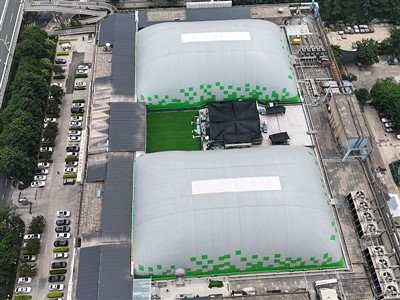
As someone who’s been in the air dome game for 10 years—dealing with schools, small businesses, and even local rec centers—let me tell you, the answer isn’t a flat yes or no. It’s a “hell yeah, but only if you pick the right one for your needs.” No jargon, no overpromises, just real stuff I’ve seen work (and fail) with school clients.
First, let’s get the basics out of the way for anyone who’s never seen an air dome. These aren’t those rickety bouncy houses kids use for birthday parties—those are inflatables. Air domes are permanent (or semi-permanent) large structures, held up by constant, low-pressure air from a blower. They’re essentially huge, weatherproof “tents” that don’t need poles or frames because the air pressure inside makes them rigid. For schools, that’s a game-changer, right? Schools usually have a gym that’s too small for big events, or a field that’s useless when it’s muddy or rainy. But before you start daydreaming about hosting a state basketball championship in one, let’s break down the stuff that actually matters for schools.
Let’s start with the biggest win: flexibility. Schools have so many random events—one week it’s a middle school dance, the next it’s a cross-country meet that got rained out, then a science fair with 500 kids, then a graduation that needs to fit 1,000 people. A lot of air domes we set up for schools are semi-permanent, meaning we can break them down and move them if you have a big event off-site, or just deflate them for summer break. Wait, no—wait, some schools don’t want to move them, so we do permanent ones, but most K-12 or small colleges go for the semi because they don’t have a ton of space 24/7.
But here’s the thing that most people don’t tell you: air domes aren’t just “big tents.” The ones we build for schools have specific features that gyms or old tents don’t. Like, we can add climate control—so in winter, it’s warm enough for a basketball game, and in summer, we can crank the AC (yes, air domes can have AC) so kids aren’t melting during a spring musical. We also reinforce the floors with gym-grade surfaces, so you don’t have to worry about kids slipping or damaging a court if you’re hosting a game. And the walls? They’re not thin plastic—they’re UV-resistant, so they don’t fade in the Texas sun, and waterproof, so even a thunderstorm won’t turn your event into a mud pit.
Now, let’s talk about the stuff that trips schools up. First, cost. Wait, I know what you’re thinking—“These are probably super expensive.” Yeah, they’re not $500, but compared to renting a school gym or a local auditorium? They’re comparable, especially if you’re hosting multiple events. Let’s do quick math: A gym rental for a graduation with 800 people might be $1,500, plus cleaning fees, plus if you need a stage or chairs, that’s another $500. An air dome for that same event? We can set it up on your school’s field, add chairs, a stage, and climate control, and it’s around the same price—sometimes even less, because you don’t have to pay for a third-party venue. Also, if you use it for sports practices year-round, you’re not paying gym fees every time. That adds up over a school year.
Another thing people worry about: safety. Let’s get real—schools can’t mess around with safety, especially with kids. Air domes are way safer than tents in wind, right? Because they’re held up by air, not flimsy poles that can snap. We do safety checks every time we set one up, and we have backup blowers—if the main one goes out, the backup kicks in within 10 seconds, so the dome doesn’t collapse. Also, we install fire suppression systems, smoke detectors, and emergency exits that are up to code. I’ve had a school tell me they were nervous about hosting a dance, but after we showed them the safety inspections (we have third-party ones every quarter, for permanent domes), they were all in.
Wait, but there are downsides. No structure is perfect. For small schools, like a K-5 with 200 kids, an air dome might be overkill—you could just use the gym. Or if you want to host a tiny bake sale, you don’t need a $10k dome. Also, air domes aren’t great for super intimate events—like a 50-person parent-teacher meeting. They’re big, so the space can feel empty if it’s not filled. But for events where you need space for a lot of people or equipment, it’s ideal. Another downside: if you’re in a place with extremely high winds (like a desert with gusts over 50 mph), we have to adjust the tension, but that’s rare. Most schools are in areas where wind isn’t a huge issue, so that’s not a problem.
Let me share a real example, because I don’t like talking hypotheticals. Last year, we worked with a middle school in Ohio. Their gym was old—leaked when it rained, couldn’t fit the whole 6th grade for their end-of-year field day, and the floor was so bumpy kids were tripping during PE. They got a semi-permanent air dome set up on their soccer field. Now, they use it for PE, basketball games, field day, and even a fall carnival. They told us they saved $3,000 this year because they didn’t have to rent a local park for field day, and the gym repairs they were planning (to fix the leak) were totally scrapped. The best part? Last month, when their graduation got rained out, they moved it into the dome, and it was perfect—no mud, no rain, and enough space for all the parents.
Another example: a small college in the Pacific Northwest. Their baseball team’s field was always muddy in April, so they couldn’t host home games. We set up a dome with a turf field, and now they host conference games there. They even rent it out to local youth teams on weekends, which gives the college extra money for their sports program. That’s the thing—air domes aren’t just for school events; they can be a revenue stream, too.
Wait, let’s talk about accessibility. A lot of old school buildings have bad access for wheelchairs, ramps that are too steep, or limited parking. But an air dome can be set up on a flat spot, we add ADA-compliant ramps, and we can even expand the parking lot (temporarily, if needed) by using the field space. We’ve had schools tell us that parents with mobility issues love that events in the dome are easier to get around than the old gym, which has narrow hallways.
Now, I know you’re probably thinking, “This sounds great, but what about the upkeep?” Is it high maintenance? No, not really. We give schools a quick guide—wipe down the inside every month, check the blower filters once a week, and if there’s a small tear (like from a baseball), we sell patching kits that take 10 minutes to fix. For permanent domes, we do a yearly check-up, which is included in the maintenance package we offer. It’s way less work than a gym, where you have to clean the floors, fix the lights, and deal with mold if the ventilation is bad.
Let’s wrap this up: air domes can definitely be used for school events—they’re great for when you need extra space, weather protection, flexibility, and even extra cash for your school. But they’re not for every school. If you’re a tiny K-2 school with no big events, it’s probably not worth it. If you’re a middle school, high school, or small college that hosts games, graduations, fairs, or other large events, it’s a no-brainer.
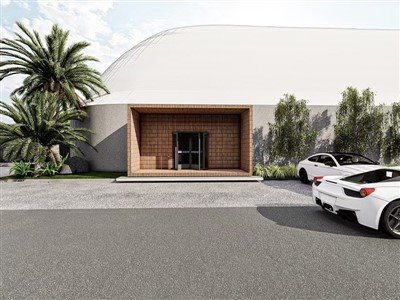
If you’re curious, shoot us a note. We can send over a free, no-obligation quote, or even a virtual walkthrough of some domes we’ve set up for other schools. No pressure, just honest answers.
Air-Supported Foundation Pit Air Domes References:
- National Association of School Facilities Managers. (2022). Alternative Venue Solutions for K-12 School Events.
- International Air Dome Association. (2023). Safety and Performance Standards for Inflatable Membrane Structures in Educational Settings.
- U.S. Department of Education. (2021). Budget-Friendly Infrastructure Upgrades for Small to Mid-Size Schools.
Hebei MiRuite Air Dome Manufacturing Co., Ltd.
Hebei MiRuite Air Dome Manufacturing Co., Ltd. is one of the most experienced air domes manufacturers and suppliers in China, also supports customized service. As we have world-leading production equipment and strong manufacturing capabilities, we warmly welcome you to buy high quality air domes made in China here from our factory. For quotation, contact us now.
Address: Workshop No.7, Winter Sports Equipment Industrial Park, Wanqu District, Zhangjiakou City, Hebei Province, China
E-mail: xinyuanqimo2008@gmail.com
WebSite: https://www.xyairdome.com/
