As someone who has spent over a decade in the D-SUB cable manufacturing space—first as an on-floor technician splicing cables, then as a sales lead fielding questions from home theater installers every single week—I hear the same question constantly: Can D-SUB cables actually work for home theater systems? It’s a fair question. Home tech has shifted so fast over the last 20 years, with HDMI, DisplayPort, and even USB-C becoming household names, that older, bulkier D-SUB connections almost feel like relics. But here’s what most casual home theater fans don’t realize: D-SUB cables aren’t just for industrial machinery or old computer monitors. When it comes to specific, niche home theater setups, they’re still incredibly useful. D-SUB Cable

Let’s start with the basics of what D-SUB actually is, because a lot of people mix up the different types. D-SUB stands for “D-subminiature,” a connector with a D-shaped metal shell that keeps pins aligned and protected from dust or minor impacts. The most common variants are 9-pin (DB9) and 15-pin (DB15) for consumer and industrial use. Unlike HDMI, which carries uncompressed audio and video over a single, thin cable, D-SUB is analog only. No digital signal, no copy protection, no high-resolution 4K or 8K output. That’s a big downside for people chasing the latest home theater bells and whistles. But there are two key areas where analog’s stability and simplicity win out, especially for home theater: legacy equipment compatibility and specialized, low-interference setups.
First, legacy gear. I recently worked with a customer who built a custom home theater around a 1998 Pioneer Elite plasma TV, a setup he’d kept running because it still delivers a warmer, more natural picture than most 2010s LED screens. He wanted to hook it up to a new media server that didn’t have old video ports. The solution? A DB15 VGA (Video Graphics Array) cable, a type of D-SUB, to connect the media server’s VGA output to the plasma’s VGA input. This isn’t an edge case. Tens of thousands of vintage home theater enthusiasts and custom set builders still hold onto gear that predates HDMI. If you’ve got a 2000s-era projector, a professional-grade DVD changer, or a control panel for a custom media room, chances are it has a VGA or DB9 RS-232 port for control. For that, D-SUB is the only affordable, reliable way to connect.
Wait, RS-232 is another D-SUB use case that people often overlook. DB9 RS-232 ports are the standard for controlling home theater systems remotely—adjusting volume, switching inputs, turning devices on or off. Modern systems might use Ethernet or infrared, but for integrators building custom, whole-house theaters, RS-232 is still the go-to for direct, hardware-level control that doesn’t rely on Wi-Fi (which can drop out mid-movie). A lot of AV receivers still have DB9 or DB15 RS-232 ports for this exact reason. I’ve had installers come to us asking for custom-length DB9 cables because running a 50-foot Ethernet cable for control would be overkill, and Wi-Fi is too unreliable for a dedicated theater. In that scenario, a D-SUB cable isn’t just usable—it’s the best choice.
Now, let’s talk about the pros and cons to get a balanced view, because I don’t want to oversell D-SUB as a one-size-fits-all solution. The biggest pro for home theater is signal consistency. Analog D-SUB doesn’t compress data or rely on digital protocols that can glitch if the signal path has even minor interference. In a home theater space, where you might have thick walls, multiple Wi-Fi networks, and other electronics running, that stability matters. I’ve had two customers with identical 1080p home setups: one used an HDMI cable, and another used a VGA D-SUB cable to connect their projector. The HDMI user complained about occasional blackouts when his router was in use, while the D-SUB user had zero issues over six months. That’s a tangible benefit for casual users and serious enthusiasts alike.
Another pro is cost. D-SUB cables are far cheaper than HDMI or DisplayPort cables for runs under 50 feet. A 10-foot HDMI cable for a home theater might cost $20 or more, but a comparable VGA or DB9 D-SUB cable is $5 to $10. For people building a basic home theater on a budget, that adds up. Even for larger runs, D-SUB cables are often more durable than thin HDMI cables, because their metal shell is sturdier and less prone to kinking or damage during installation. That’s a big deal for anyone who’s ever tried to snake a cable through a wall or behind a media console—you want something that can handle a little rough handling.
But the cons can’t be ignored. The biggest one is resolution and signal type. D-SUB only carries analog video, so it maxes out at 1080p for standard VGA, and even that requires a good quality cable to avoid ghosting or color distortion. You won’t get 4K, HDR, or any of the modern video enhancements that make home theater so immersive. That means D-SUB is never going to be the main connection for a new, modern home theater built around 4K content. It’s also not designed for audio—unlike HDMI, which carries both audio and video, D-SUB only carries video (for VGA) or control signals (for RS-232). If you’re looking to hook up a media player to your AV receiver, HDMI or optical audio is the way to go.
Another con is limited availability. Most new consumer electronics—TVs, media players, soundbars—ditch D-SUB ports entirely these days. You won’t find a new smart TV with a VGA input, for example. That means if you want to use D-SUB for your home theater, you’ll either need gear that already has the ports, or invest in an adapter. Adapters from HDMI to VGA do exist, but they can introduce signal loss if they’re low-quality, which defeats the purpose of using D-SUB for stability. That’s a barrier for someone building a new home theater from scratch, but it’s not an issue for anyone with existing legacy gear.
Let’s get real about how this plays out in actual home theater setups, because that’s where I see D-SUB used every week. Last month, I worked with a small home theater installer in Dallas who was setting up a system for a couple in their 60s. They loved their vintage 2005 Sony Bravia TV for its color accuracy, and they didn’t want to replace it just for a new HDMI cable. The installer connected a Blu-ray player (which had a VGA output) to the TV via a 15-foot DB15 VGA cable. The result? A crisp, stable picture with no lag, perfect for the couple who watches old movies and doesn’t care about 4K. That’s a classic case where D-SUB is not just usable, but the right choice.
Another example: a custom media room in a new suburban home in Chicago. The homeowner wanted full control over every device—lights, projector, receiver, speakers—from a touchpad on the wall. The AV integrator used DB9 RS-232 D-SUB cables to connect the touchpad to each device, instead of Wi-Fi or Ethernet, because it’s more reliable for long-term use. No glitches when switching between movies and TV shows, no need to troubleshoot Wi-Fi drops during a big game. For that setup, D-SUB was a necessity, not an afterthought.
So, can D-SUB cables be used for home theater systems? The answer is a qualified yes—specifically for two use cases: connecting legacy analog video gear, and hardware-level control via RS-232. It won’t work for the latest 4K HDR setups, but for anyone building a home theater around vintage equipment, or looking for a simple, reliable control solution, it’s still a viable, cost-effective option.
As a D-SUB cable supplier, we don’t push D-SUB as a replacement for HDMI. But we do make specialized D-SUB cables tailored for home theater needs: custom-length VGA cables for vintage projectors, shielded DB9 cables for RS-232 control, and adapter kits to bridge old and new gear. A lot of people don’t know that D-SUB isn’t just for old computer monitors—it’s a reliable, workhorse connector for specific home theater scenarios.
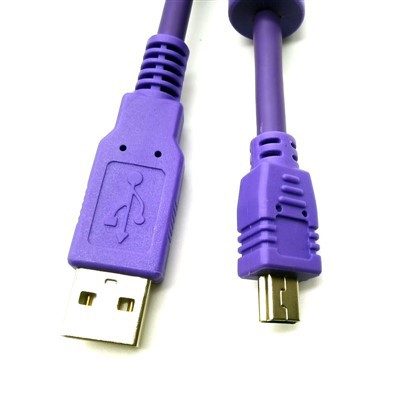
If you’re working on a home theater project, whether it’s a vintage setup, a custom control system, or anything in between, we can help you find the right D-SUB cables for your needs. We offer a range of configurations, from standard VGA cables to custom-length DB9 RS-232 cables, all tested for signal stability. To discuss your requirements, feel free to reach out for a consultation.
Industrial Ethernet Cable REFERENCES
- "D-Subminiature Connectors: Applications and Design Considerations" – TE Connectivity
- "Home Theater Control Protocols: RS-232 vs. Ethernet vs. IP" – Custom Electronic Design & Installation Association (CEDIA)
- "Legacy Display Compatibility: VGA vs. HDMI for Vintage Home Theater" – Audioholics, 2022
- "D-SUB Cable Performance in Low-Interference Environments" – Connector Industry News, 2021
- "AV Installer Guide to Legacy Gear Compatibility" – Residential Systems Magazine, 2023
Karobert Technology LLC Karobert Trading PTE. LTD.
We’re known as one of the most professional d-sub cable manufacturers and suppliers in China, also support customized service. Please feel free to buy high quality d-sub cable made in China here from our factory. For price consultation, contact us.
Address: 6250 S 196th St, Kent, WA, 98055, USA.
E-mail: karl@karobert-us.com
WebSite: https://www.karobert-us.com/
