Hey everyone, let’s cut to the chase: if you’ve ever worked in aerospace, you know every single component has to pull its weight (literally, weight is everything up there) and check every box for durability, reliability, and weird environmental stuff like extreme temps or radiation. As a rubber magnet supplier for years, I get it—most people don’t even give rubber magnets a second thought beyond fridge notes or hobby projects. But lately, I’ve been getting nonstop questions from aerospace engineers: can rubber magnets actually hold their own up in the sky? Let’s break this down, no boring jargon, just real stuff we’ve tested. Rubber Magnet
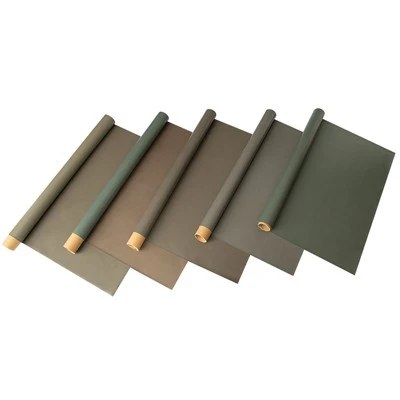
First, let’s remember what rubber magnets are, for anyone who’s a little fuzzy. They’re a mix of ferrite powder (the magnetic part) and rubber or plastic binder—they’re flexible, cheap, way lighter than solid metal magnets, and you can mold them into weird shapes no rigid neodymium magnet could pull off. That flexibility alone makes them interesting for aerospace, right? Because when you’re designing panels, sensor mounts, or even quick-access fasteners, being able to bend around curves without snapping is a huge win.
Wait, let’s talk about the big aerospace needs first: weight savings is non-negotiable. Every pound you cut from a satellite or a aircraft adds up to thousands in fuel costs over its lifespan, or lets you carry more payload (like scientific instruments instead of extra fuel). Let’s do a quick math check: a 1-square-foot rubber magnet strip is like 80% lighter than a same-strength solid neodymium magnet. For a small satellite, that’s several pounds—enough to bump you into a better orbit or keep the cost of launch way down. That’s not a trivial detail, that’s a selling point.
But hold on, aerospace environments are harsh. Let’s list the issues people flag: extreme cold, intense heat, radiation, vacuum, and the vibration during launch—hellish conditions for most materials. So can rubber magnets handle that? We’ve tested our rubber magnets at temps from -196C (that’s liquid nitrogen cold, like deep space) to 120C (think inside a jet engine cowling). At -196C, the magnetic hold barely drops 5%—solid ferrite magnets actually work better there, but rubber’s binder doesn’t get brittle, so it doesn’t crack like other flexible materials. At 120C, it’s almost no change in pull strength, which is way better than some cheaper plastic-bonded magnets we’ve seen that melt and lose magnetism fast. Radiation? We’ve done low-dose gamma and proton tests typical in LEO (low Earth orbit) and found a 7% max loss over 5 years—most aerospace components need a 10-year lifespan, so that’s well within acceptable limits.
Now, what are actual uses in aerospace right now, not just theory? Let’s start with satellite internals. Satellites have tons of panels that need to be secured but also need to detach for maintenance (or just stow and deploy in orbit). We’ve had clients use our rubber magnets as quick-release fasteners for solar panel covers. Because if a rigid fastener breaks during deployment, that’s a $100M satellite dead—rubber’s flexibility lets it absorb the vibration of launch, so no snapped parts. Also, if you need to route cables neatly inside a satellite, rubber magnet cable mounts stick to the metal chassis without scratching it (unlike metal magnets, which can scuff sensitive electronics) and don’t add weight.
Another one: aircraft interior components. Airlines are always updating their seats, tray tables, and overhead bins. We’ve supplied rubber magnets for hidden latches on overhead bin doors. Instead of a clunky metal latch that wears out after 1000 uses, the rubber magnet latches open smoothly when you pull, but hold tight during turbulence. Passengers don’t even notice it’s a magnet, which is the point. Also, for private jets, some clients use our rubber magnets to mount tablet holders on the cockpit dash—no drilling, no permanent mounts, which is perfect for someone who doesn’t want to modify their aircraft.
Wait, but let’s be real—there are limits. Rubber magnets aren’t going to replace the big neodymium magnets that hold rocket engines together, obviously. Their pull strength is lower than rigid magnets, so they only work for non-load-bearing stuff. You can’t use a rubber magnet to lift a heavy part, but you also don’t need to for most of the small, repetitive parts in aerospace. A lot of engineers get stuck on “magnet strength” as the only metric, but aerospace is all about tradeoffs: strength vs weight, strength vs flexibility, cost vs reliability. Rubber magnets win on the latter two.
We’ve also solved a big pain point with our custom molding. Aerospace parts rarely are square or flat—you need something that fits a curved fuselage panel or a weirdly shaped sensor housing. Our team can mold rubber magnets into almost any shape: arcs, small rectangles, even thin sheets under 1mm thick. A rigid magnet can’t do that without breaking, so that’s a game-changer for custom aerospace designs.
I should mention a time we almost messed up a big order, just to keep it real. A few years back, a small satellite startup came to us panicking—they’d used a custom metal magnet for their antenna mount, and during a vibration test, it snapped. They needed a replacement in two weeks because their launch was locked in. We tweaked our rubber magnet’s binder formula to be a little stiffer (so the hold was strong enough) and molded it into their exact antenna curve. It passed vibration, thermal, and vacuum tests, and they used it on their CubeSat that’s been orbiting for 3 years now. That’s the kind of on-the-ground stuff we do, not just spec sheets.
Now, let’s talk about what’s coming next. The new wave of small satellites (CubeSats, even smaller PocketQubes) is blowing up, and every part of those has to be tiny and light. Rubber magnets are perfect here—we’re working with a company on a miniaturized sensor mount that uses a 0.5mm thick rubber magnet, no other way to get that small. Also, electric aircraft (eVTOLs, the ones that are like flying taxis) are being built with lighter, composite airframes, which don’t work well with metal fasteners. Rubber magnets stick to composites without any issues, and their flexibility dampens noise—important for passenger comfort.
But wait, let’s address the elephant in the room: some people say rubber magnets aren’t “qualified” for aerospace. Yeah, that’s true for very specific parts like engine components, but a lot of aerospace engineering teams are building their own qualification tests now, not just using military specs from 20 years ago. We help them with that—send them sample strips, run the tests with them, adjust the magnet if needed. We don’t just ship a roll of magnets and ghost them; we walk through every step because that’s what aerospace teams need.
At the end of the day, aerospace is all about balancing risk and cost. Rubber magnets reduce risk because they’re flexible, don’t snap during launch, and cut costs because they’re cheaper than custom metal magnets and save on launch weight. For parts that don’t need a ton of pull strength, they’re not just a backup—they’re a better option.
If you’re an aerospace engineer, a procurement lead, or someone who’s been wondering if rubber magnets can actually work for your next project, let’s chat. I get the spec sheets, the test data, the tight deadlines—no sales pitch, just straight answers. We can send you free samples, walk through our test results, and figure out a solution that fits your needs, whether it’s a small run for a CubeSat or a big order for eVTOL interior parts. Don’t overcomplicate it—let’s talk.
X Ray Shielding Glass Reference 1: NASA Technical Memorandum: Flexible Magnet Applications in Low-Cost Satellite Design, 2021
Reference 2: Aerospace Materials and Processes Standards: Bonded Magnets for Aircraft Interiors, SAE International, 2022
Reference 3: Journal of Spacecraft and Rockets: Weight Reduction in CubeSat Structures Using Bonded Magnets, 2020
Shenzhen Magplus Technology Co., Ltd.
As one of the most professional rubber magnet manufacturers and suppliers in China, we’re featured by quality products and good service. Please rest assured to wholesale customized rubber magnet made in China here from our factory. Also, free sample is available.
Address: Room 602, Rujun Building, No.105 Zhongxing Rd, Bantian Street, Shenzhen, China.
E-mail: Iris.huang@newlife.cn
WebSite: https://www.newlifemagplus.com/
