If you’ve ever spent time on a machining floor—whether you’re an operator tending to CNC mills, a maintenance tech wiping down a greasy control panel, or a plant manager staring at sky-high HVAC bills—you’ve probably noticed that thin, hazy sheen of mist hanging in the air, like fine fog left behind by cutting fluids and lubricants. That haze isn’t just annoying; it’s a safety hazard, a maintenance nightmare, and a hidden drain on your bottom line. Which brings us to the question everyone on that floor eventually asks: what is an oil mist collector, and how do I know if I need one? Oil Mist Collector

Let’s start with the science, because this isn’t just a marketing buzzword—its job is rooted in how oil behaves when it’s pushed to high speeds. When you run a CNC machine, gear, or compressor, small droplets of lubricating oil are flung into the air by rotating parts, high-pressure streams, or even the heat of cutting tools melting tiny bits of fluid into vapor that quickly cools into micro-droplets. These droplets range from 0.1 to 10 microns in size—so small, most can’t be seen with the naked eye, but they stick to every surface in the room: your machine’s electrical connections, your warehouse lights, your lunchbox if you eat on the floor, even the linings of your lungs if you breathe them in.
An oil mist collector is a industrial air filtration system built to capture and remove those micro-droplets from the air before they can cause harm to people, equipment, or the environment. Think of it like a giant, super-effective vacuum made specifically for oil particles, but that’s oversimplifying it. The best collectors use a multi-stage filtration process, because not all oil mist is the same. The first stage usually pulls in the heavy, larger droplets first—these just fall into a collection tray, like how rainwater runs off a window. The second and third stages handle the tiny, stubborn micro-droplets, using either mechanical filters that trap particles electrostatically, or centrifugal forces that spin the droplets away from air like a wet clothes in a dryer. The end result? Air that’s free of harmful oil mist, blown back into the facility clean.
Now, let’s get real about why this matters for your operation, because I’ve heard every excuse from plant owners over the years: “We just open the windows.” “The mist is part of the process.” “It’s too expensive to add another machine.” Let’s bust those myths one by one. First, windows don’t work on most machining floors—most plants are climate-controlled, and opening them lets in dust, pollen, and humidity, which actually makes corrosion worse. Second, that “part of the process” line ignores OSHA standards, plain and simple. In the U.S., OSHA limits oil mist exposure to 5 mg per cubic meter over an 8-hour workday, and long-term exposure has been linked to asthma, chronic bronchitis, and even higher risk of respiratory cancers. I’ve seen operators with permanently damaged lungs because their shop didn’t have proper mist collection, and that’s not a risk worth cutting corners on.
Then there’s the cost of not having an oil mist collector, which often is way higher than the cost of the collector itself. Let’s do a quick math exercise: a machine shop with 10 CNC mills, each running 24/7, might generate 50 gallons of wasted lubricating oil every month if the mist isn’t captured. That oil isn’t just gone—it’s coating your machine’s moving parts, increasing friction, and making your tools wear out 30% faster than they should. I’ve also seen facilities where electrical systems short out because oil mist creeps into control panels—replacing a CNC control board can cost $5,000 or more, and that’s downtime you can’t afford when your order is due next week. On top of that, environmental compliance: many regions require facilities to treat oily air before releasing it, and fines for violating air quality standards can run into the thousands of dollars per day.
So, how do you pick the right oil mist collector for your shop? That’s the next question I get all the time, and it’s not one-size-fits-all. First, you need to calculate your mist load—how much oil your machines generate per hour, which depends on the number of machines, their size, the type of cutting fluid they use, and how long they run each day. Next, think about your space: do you need a collector that mounts right on the machine (for small to medium operations) or a central unit that pulls mist from multiple machines through a shared ductwork system (for large shops)? Then there’s maintenance: some collectors use disposable filters, which are easy to swap out, while others are washable, which saves money over time. And don’t forget energy efficiency—inefficient collectors suck too much power, which adds to your utility bills, so look for models that auto-adjust airflow based on mist levels.
Let’s talk about what makes a good oil mist collector different from a cheap knockoff, because I’ve seen too many shops buy the $500 model from a third-party supplier that breaks down in six months. The best collectors are built for continuous, industrial use—they have heavy-duty motors, corrosion-resistant casings, and filtration systems that can handle both water-based and synthetic oils, which are common in machining. They also have safety features like overheat protection, filter change indicators, and spark arrestors, which are non-negotiable for facilities with high heat or flammable fluids. A good collector should also be easy to install—no need for a construction crew, just a hook-up to your machine or ductwork, and you’re good to go.
I know, I get it—adding new equipment to a busy shop is a hassle. That’s why the oil mist collectors we supply are designed to integrate seamlessly into any operation, no major downtime required. We work with shops of all sizes, from small job shops with 2 machines to large automotive facilities with 100+ CNC lines, and we tailor each solution to your specific needs, not a one-size-fits-all proposal. We don’t just sell you a machine and disappear—we provide ongoing support, filter replacements, and maintenance checks to make sure your collector works as hard as your team does, for years to come.
At the end of the day, an oil mist collector isn’t just another piece of equipment—it’s an investment in your people, your machines, and your bottom line. It means your operators go home with clean lungs every day, your machines last longer and run more efficiently, and you avoid costly fines and downtime. If you’re tired of wiping oil off every surface, dealing with high HVAC bills, or worrying about air quality compliance, it’s time to stop just managing oil mist and start eliminating it.
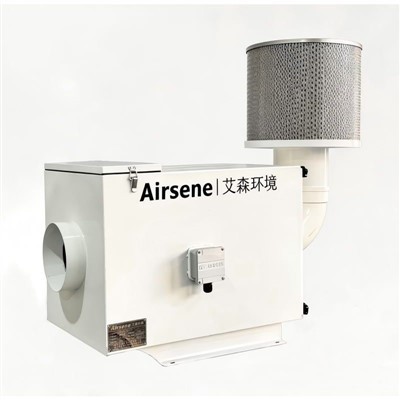
If you’re ready to learn more about how an oil mist collector can work for your operation, we’re here to help. Whether you have questions about sizing, installation, or pricing, don’t hesitate to reach out to start a conversation about your needs. We don’t do pushy sales pitches—we work with you to find the right solution that fits your budget and your workflow, so you can focus on what you do best: running a successful, safe, and efficient facility.
Filter Purifier References:
- Occupational Safety and Health Administration. (2022). Air Contaminants in Machine Shops. OSHA 3456-10N.
- National Institute for Occupational Safety and Health. (2021). Health Effects of Lubricating Oil Mists and Fumes. NIOSH Publication 2021-105.
- Society of Manufacturing Engineers. (2020). Machining Fluid Management Best Practices for CNC Operations. SME Press.
- American Society of Heating, Refrigerating and Air-Conditioning Engineers. (2019). Industrial Ventilation: A Manual of Recommended Practice for Design. ASHRAE.
- Environmental Protection Agency. (2022). Industrial Air Emissions Compliance Standards for Metal Fabrication Facilities. EPA 456/F-22-001.
Shaoxing Airsene Environmental Technology Co., Ltd.
As one of the most professional oil mist collector manufacturers in China, we’re featured by quality products and low price. Please rest assured to buy discount oil mist collector made in China here from our factory. We also accept customized orders.
Address: No. 1821, Renmin West Road, Shangyu Economic Development Zone, Shaoxing, Zhejiang Province
E-mail: airsene@163.com
WebSite: https://www.airsene.net/
