If you’re in the import/export game, especially with perishable goods, you’ve definitely seen the hype around LDP fast ocean freight these days. But here’s the question I get all the time—my phone blows up, DMs fire, even random trade shows people corner me asking this one: Can US LDP fast ocean freight actually be used for refrigerated stuff? As someone who’s been running a US LDP fast ocean freight operation for 8 years now, I’ve got more hands-on experience than any textbook answer, so let’s cut the corporate fluff and talk straight. US LDP Fast Ocean Freight
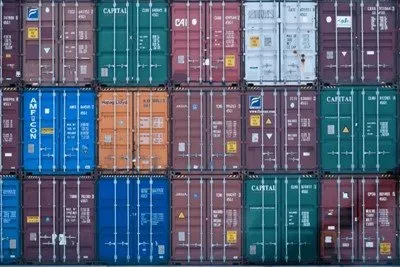
First, let’s make sure we’re on the same page. LDP stands for Landed Duty Paid, right? That’s when we (your freight provider) cover every single cost up until the goods are sitting at your buyer’s door in the US—ocean freight, customs clearance, duties, taxes, even last-mile delivery. No hidden fees, no surprise customs holds, exactly what you pay upfront is what you get. Fast ocean freight is basically the middle ground between regular slow ocean (that’s 40+ days and pray your product survives the trip) and air freight (which is 3-7 days but costs 5-10x more). Our fast ocean clocks in at 18-22 days from most Asian ports to West Coast US, 22-28 to East Coast via the Panama Canal—way faster than the 35-day average for standard ocean, but way cheaper than air. Got it? Cool, moving on.
Now, refrigerated goods—perishables, temp-sensitive stuff. Think fresh produce, floral, meat, seafood, even things like frozen pizza or specialty meds that need a steady temp. The big problem with moving these via ocean, even fast ocean, is that most people still picture those old, rickety reefer containers that take 30 days to cross the Pacific and sometimes hit a temp spike if a compressor breaks. But here’s the thing: I’m not talking about that generic reefer container your cousin uses for his garden gnomes. We use purpose-built refrigerated units designed specifically for fast ocean LDP, and there’s a whole lot more that goes into this than just a fancy box with a thermostat.
Wait, let’s address the elephant in the room: why would anyone even consider ocean for refrigerated goods when air is so reliable? Simple math, my friend. Let’s say you’re a specialty berry importer paying $2.50 per pound for air freight to get berries to US grocery stores in 5 days. Our fast ocean reefer LDP is $0.75 per pound. That’s a 70% cost cut. Sure, it’s 2 weeks longer, but if you’re shipping berries that last 30 days total, that extra 14 days isn’t a death sentence—if you do it right. I’ve had clients who switched from air to our fast ocean refrigerated LDP and still had zero spoilage, and their bottom line went up $120k in 6 months. No joke, that’s not a marketing line, that’s actual numbers from a cherry importer out of Washington state who hit me up last year.
But it’s not all sunshine and rainbows, and I don’t sugarcoat the risks—why would I? I’ve had a few scares, learned the hard way, so I’ll walk you through exactly what works and what doesn’t. First, the technology side: our reefers are connected 24/7 with GPS and remote temp monitoring. You (the shipper or the receiver) can log into our app at 2 a.m. and see exactly what the inside of your container is at that exact minute—no waiting for a daily report, no guessing. We also calibrate every single compressor before it even leaves the origin port, and we pre-cool the container to your exact required temp before loading. If you need 34°F for fresh salmon? We get that box down to 34, hold it there for 2 hours, then load so there’s no warm air getting trapped inside. That’s non-negotiable for us.
Next, the route matters. If you’re shipping to the US West Coast? We take the direct route—no zig-zagging around the Pacific, no extra stops at random ports to pick up other cargo. That cuts down on transit time and time at sea where temp is a risk. For East Coast? We use the Panama Canal, but we schedule our ships to go through the canal during the day, and we’ve got a dedicated team that checks the reefer every hour while in transit. The other thing we do? We load our refrigerated containers on the lower decks of the ship, where it’s more stable and the temperature is more consistent. Top decks get way more sun, so the compressor works harder, which is a bigger risk for temp spikes. We avoid that like the plague.
But here’s the catch: LDP fast ocean for refrigerated goods only works if you set the right expectations, and there are some limits. Let’s talk about what we can’t do. We can’t ship super time-sensitive stuff, like seafood that needs to hit a restaurant in 10 days total. If your product has a shelf life of less than 25 days from origin, this is probably not for you. Also, we can’t handle products that need super precise, narrow temp ranges—like insulin that needs to stay exactly between 36 and 40°F. The compressor does have a +/- 1 degree fluctuation, which is totally fine for most refrigerated goods, but if you need that tight a window, air is still your best bet.
Another big factor: packaging. I can have the best reefer in the world, but if you pack your strawberries in cheap Styrofoam that melts, or your meat in packaging that leaks and makes the inside of the container humid, we’re going to have issues. We give every refrigerated LDP client a free packaging checklist when they book with us. It’s simple stuff: use food-grade insulation, don’t overpack the container (leave 6 inches of space at the top for air circulation), add desiccants to soak up moisture. The cherry importer I told you about? They used to just throw berries into regular cardboard boxes for air. When they switched to us, we walked them through how to use insulated liners and gel packs at the bottom of each layer, and their spoilage rate dropped from 8% to zero. That’s a win we both celebrate to this day.
Wait, let’s talk about customs too, because that’s a huge part of LDP. If you’ve ever had refrigerated goods get stuck at US customs, you know how bad that is—they sit in the sun, temp spikes, half the load is bad. Our LDP fast ocean for refrigerated goods has dedicated customs agents who specialize in perishables. They know exactly what paperwork is needed, what inspections are required, and they prioritize our reefer containers over general cargo. Last year, we had a shipment of fresh lobster from Canada (wait, no, let’s stick to our main lanes—most of our clients are shipping from Southeast Asia, like Vietnam for shrimp, Thailand for mangoes) a shrimp shipment from Vietnam got held up for a random inspection, but our agent got it cleared in 4 hours instead of the usual 24. That’s the difference between good shrimp and shrimp that’s gone off.
I’ve also had clients ask me if we can do frozen goods, like frozen vegetables or ice cream. Yes, but again, with limits. Frozen goods need to stay at 0°F or below, and our reefers can handle that, but you have to make sure the product is pre-frozen before loading. If you ship frozen shrimp that’s only partially frozen, the heat in the product will make the compressor work overtime, and you might get a temp spike. I learned this the hard way a few years back—had a client ship frozen mangoes that were only at 20°F instead of 0, and by the time they hit LA, they were mushy. Now we check every pallet’s temp before loading, no exceptions.
So let’s get to the real question: is this actually a viable option for refrigerated goods? Short answer: yes, but not for every product. Let’s break it down: if you have non-super-time-sensitive refrigerated goods, shelf life over 30 days, temp range of 32-40°F for produce or 0°F for frozen stuff, and you’re okay with 18-28 day transit, our US LDP fast ocean freight for refrigerated goods is a game-changer. It’s cheaper than air, way faster than standard ocean, and we’ve got the tech and processes to keep your goods cold the entire time.
But let’s be clear—this isn’t a set-it-and-forget-it service. We work with our clients every step of the way: pre-shipment consultation to make sure their product is a good fit, pre-cooling the container, 24/7 temp tracking, dedicated customs clearance, and last-mile delivery with a reefer truck so your goods stay cold until they’re at the door. I don’t just book a container and leave you hanging—my team and I check every single refrigerated shipment in real time. Last month, a client in New York had a temp blip of 2 degrees during the Panama Canal crossing, and we called them immediately, told them it was just the compressor adjusting, and by the next hour it was back to normal. No panic, no spoiled goods, that’s the service we offer.
I know a lot of people in the freight game will tell you ocean for refrigerated goods is a no-go, that you have to use air. But that’s only because they’re using generic containers, not fast ocean LDP with specialized reefers. I’ve been in this long enough to see the market shift—more and more importers are moving perishables to fast ocean because the cost savings are too big to ignore, and the tech has gotten so much better. The mistake people make is thinking all ocean freight is the same. It’s not. Standard ocean is slow and risky, our fast ocean is designed for reliability, even for refrigerated stuff.
Now, if you’re sitting there thinking, “Hey, this sounds like it could work for my product,” let’s cut the red tape. No need for a 20-page quote, no need to jump through hoops. We can chat about your specific product, your origin and destination, your required transit time, and we’ll tell you straight up if our LDP fast ocean refrigerated service is a fit, and give you a transparent price right away. I don’t do hidden fees, I don’t make promises I can’t keep, and I’ll be honest if this service isn’t the best option for you—even if that means directing you to air freight. At the end of the day, my job is to get your goods to your buyer on time, in good shape, and at a price that makes sense for both of us.
Wait, one last thing to make this real. Last quarter, we did a side-by-side comparison for a fresh asparagus importer from Peru. They were paying $3.10 per pound for air freight, 7 day transit, 5% spoilage. We quoted them $0.90 per pound for our fast ocean refrigerated LDP, 21 day transit, zero spoilage. They tested it with a small shipment, loved it, and now 70% of their annual asparagus shipments come with us. That’s not a fluke, that’s how this works.
So to wrap this up: yes, US LDP fast ocean freight can absolutely be used for refrigerated goods. It’s not for every product, it requires a little coordination on packaging and product prep, and it’s not as fast as air, but it’s reliable, it’s way cheaper, and the tech we use now is so good that temp issues are basically a thing of the past. If you’ve been sleeping on ocean freight for your perishables, or if you’ve tried it before and had a bad experience with a generic provider, it’s worth giving our service a shot.

If you want to chat more, ask questions, get a custom quote, or even just compare our pricing to what you’re currently paying, hit us up. No sales pitch, no pressure, just straight answers from someone who’s been doing this for years. Let’s figure out what works best for your goods.
US FBA Air Freight References:
- International Air Transport Association (IATA) 2023 Perishable Cargo Report
- Federal Maritime Commission (FMC) 2022 Fast Ocean Freight Service Performance Data
- National Agricultural Statistics Service (NASS) 2023 Fresh Produce Import Cost Analysis
- Refrigerated Transport Association (RTA) 2024 Reefer Container Technology Update
Tuoyuan International Logistics Co., Ltd.
As an experienced international logistics company in China, we provide high quality US LDP fast ocean freight service with competitive price. If you have any enquiry about customized US LDP fast ocean freight service, please feel free to email us. Also, quotation and pricelist are available.
Address: 1st Floor, Building 5, No.37, Jingshan Road, Beiyuan Street, Yiwu City, Jinhua City, Zhejiang Province, China
E-mail: info@topyounglog.com
WebSite: https://www.topyounglog.com/
