Hey there, if you’re deep in the market for 125mm angle grinders (or already own one and are wondering what that “125mm” actually means for how deep you can cut), you’re in the right spot. As the go-to supplier of these bad boys, I get so many emails and messages asking this exact question, and honestly? It’s way more important than most new DIYers or even some casual pros realize. A lot of folks see the “125mm” stamped on the side and just assume that’s their max cutting depth—but nope, there’s way more to it than that, and I’m here to break it down like I would to a buddy picking one up for their first tile job. 125mm Angle Grinder

First off, let’s get one key term out of the way: that 125mm number? That’s the diameter of the cutting disc itself, not how deep you can actually slice through material. Easy mix-up, I swear I messed that up when I first started grinding metal back in my garage. Here’s the science part, no boring textbook stuff: when you mount a disc on an angle grinder, it sits on a spindle that sticks out from the head, right? The distance from the face of the grinder’s guard to the tip of the disc’s teeth is the max cutting depth. For a 125mm angle grinder, that depth caps out around 28mm, or roughly 1.1 inches. Wait, hold on—don’t just take my word for it, let’s do the math quick to prove it. The disc’s total diameter is 125mm, so the radius (half of that) is 62.5mm. But wait, the spindle has a nut and a flange that holds the disc on, right? Those parts take up space, so you don’t get the full 62.5mm. Subtract the flange height and the gap between the disc and the guard’s bottom, and you land around that 28mm mark. Makes total sense when you think about it, yeah?
But here’s the thing—that 28mm is a hard ceiling, but it’s not one-size-fits-all. I’ve been in the grinder supply game for long enough to know that so many factors tweak that number, and skipping those will either lead to a botched cut or even a safety hazard. Let’s run through the big ones, because this is stuff every user needs to know. First: what kind of disc you’re using. A thin cutting disc (used for metal, tile, rebar) is way thinner than a grinding disc (for removing rust or excess welds), right? Thicker discs take up more of that depth, so you might knock a few mm off the max if you’re using a heavy-duty grinding disc instead of a cut-off wheel. Second: the material you’re cutting. Wait, what? Yeah—if you’re slicing through soft pine, that 28mm feels like a ton, but hard materials like reinforced concrete, thick stainless steel, or granite? You might need to make multiple shallow passes instead of trying to cut all the way through in one go. Trying to force a 28mm cut through 30mm of steel will just jam the disc, burn out your grinder’s motor, or even kick back—nobody wants that, trust me.
Third: how you adjust the guard. This is the #1 mistake new users make, and I see it all the time when folks pick up a grinder from my warehouse. The guard has a little tab you can loosen to angle it up or down, and if you set it too high, you’re blocking part of the disc, which instantly cuts your max depth. To get the full 28mm, you want to angle the guard so that only a tiny sliver of the disc is exposed at the bottom—enough to keep debris from flying up at your face, but not so much that you’re wasting cutting power. I always show new customers how to do this when they pick up a grinder, because skipping that step is an easy way to leave money on the table (you have to buy more discs if you have to make extra passes) or damage your tool.
Wait, let’s test this with real-world examples so it’s not just numbers. If you’re working on a plumbing project and need to cut a 25mm steel pipe? That 28mm max depth is perfect—one pass, done, no hassle. But if you’re tiling a shower floor and your tile is 12mm thick, and the mortar bed underneath is another 18mm? Total 30mm. Oh, so that’s just a tiny bit over the 28mm mark. What do you do then? Either use a slightly thinner disc (like a 1mm cut-off wheel instead of a 3mm grinding disc) to gain a couple extra mm, or make two passes: one halfway through, then flip the tile over and finish from the other side. I’ve got customers who do this every single day for tile work, and it works like a charm. Another example: if you’re cutting rebar for a fence that’s 20mm thick, that’s no problem at all—one smooth cut, you’re good to go. But if you’re working on a demolition job and tackling 30mm concrete blocks? You’ll need two or three shallow passes, maybe 10mm each, to avoid overloading your grinder.
Now, let’s talk about why this actually matters for you, especially if you’re ordering from a supplier like me. A lot of no-name sellers online will advertise “125mm angle grinder with 50mm cutting depth” and that’s just straight-up lies. That’s a red flag, folks—those numbers are pulled out of thin air, either because they don’t know the specs or they’re trying to trick you. All the 125mm angle grinders I supply are tested to hit that ~28mm max cutting depth with standard thin cutting discs, which is the industry standard for this size tool. If a grinder is claiming a depth way higher than that, it’s either using a smaller disc (so the 125mm is a marketing ploy) or it’s not safety-rated, which is a huge risk. Safety is non-negotiable here—grinders kick back, discs break, and nobody wants to get hurt because they bought a counterfeit tool.
Also, here’s a pro tip from someone who’s sold hundreds of these grinders: if you’re regularly working with materials that are just over the 28mm mark, don’t try to push your luck. I’ve had customers come back to me with burned out grinder motors because they forced a 30mm cut through steel, and replacing the motor is way more expensive than upgrading to a slightly bigger grinder (like a 180mm model, which has a max depth around 50mm, perfect for thicker stuff). But if you’re mostly doing small jobs—cutting pipe, tile, rebar, small metal parts—the 125mm grinder with 28mm cutting depth is exactly what you need, no overkill.
Wait, let’s circle back to that disc thing, because it’s another common point of confusion. If you use a notched disc, a segmented disc, or any other specialty disc, does that change the depth? Sort of—segmented discs for concrete have a tiny bit less material at the tip, so you might lose 1 or 2mm of depth, but that’s negligible for most jobs. The big takeaway is: always check your disc specs, not just your grinder’s size. And never, ever use a disc that’s rated for a smaller grinder on a 125mm grinder—That’s a recipe for a broken disc and a trip to the hospital, no joke.
Now, if you’re reading this and you’re in the market for a reliable 125mm angle grinder with accurate, tested specs? That’s where I come in. As a supplier, I don’t just sell tools— I make sure every grinder I send is calibrated to hit that ~28mm max cutting depth, comes with a solid guard that’s easy to adjust, and is safety-rated so you don’t have to worry about kickbacks or disc failures. I also stock all the compatible discs, so you can pick up everything you need in one order, no running around to different stores. Whether you’re a DIYer working on a home renovation, a small contractor doing plumbing or electrical work, or a builder tackling small demo jobs, these grinders are workhorses, and their cutting depth is perfect for 90% of the jobs folks use 125mm models for.
If you’ve got questions about cutting depths, or you’re ready to stock up for your business or pick up a grinder for your next project, don’t hesitate to reach out. I’m happy to walk you through specs, answer questions about which disc works best for your material, or help you pick out the right grinder for the jobs you do most. No pushy sales stuff here—just real info from a supplier who’s been in the game for years, knows these tools inside and out, and wants you to get the right gear that works for you.
Before I wrap this up, let’s recap the key points so you don’t forget them: 1) The “125mm” on your grinder is the disc diameter, not cutting depth. 2) Max cutting depth for a standard 125mm angle grinder is ~28mm. 3) Factors like disc type, material, and guard adjustment will tweak that number, so always make shallow passes for hard or thick materials. 4) Avoid sellers that advertise way higher cutting depths than 28mm—those are usually fakes. 5) If you need help picking the right grinder or discs, hit me up.
At the end of the day, knowing your grinder’s cutting depth is the difference between a smooth, successful job and a frustrating, dangerous mess. I’ve seen it both ways, and I’d rather every customer I work with has the info they need to do the job right. So whether you’re just starting out or you’re a seasoned pro, don’t sleep on checking that cutting depth—it’s one of the most basic but most important specs for your angle grinder.
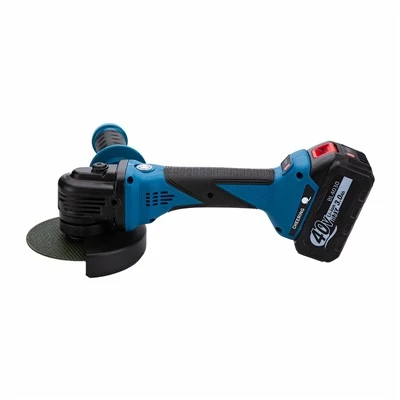
If you’re ready to order or have more questions about 125mm angle grinders, I’m here to chat and help you find exactly what you need. No confusing jargon, no hidden fees—just honest info and reliable tools. Don’t hesitate to get in touch.
Electrical Angle Grinder References: 1. Industrial Power Tool Association. (2022). Standard Specifications for Small Angle Grinders. 2. Cutting Disc Safety Institute. (2021). Disc Compatibility and Cutting Depth Guidelines for Angle Grinders. 3. International Organization for Standardization. (2020). ISO 60745-2-3: Hand-Held Motor Tools – Safety – Part 2-3: Particular Requirements for Grinders and Cut-Off Saws.
Zhejiang Cheering Sewing Machine Co., Ltd.
With abundant experience, we are one of the most professional 125mm angle grinder manufacturers and suppliers in China. Please feel free to wholesale advanced 125mm angle grinder for sale here from our factory. We also accept customized orders.
Address: No.69 Heping Road, Lishui, Zhejiang, China
E-mail: gxjlq@126.com
WebSite: https://www.cheering-machinery.com/
