Hey there, it’s Jake from [Your Company]—I’ve been sourcing and hooking up mechanical parts for over a decade, and honestly? I still run into folks who ask, “Wait, what’s the point of a coupling anyway?” Like, yeah, you see ‘em bolted between two shafts on motors, pumps, conveyors, all that stuff—but most people don’t get how they save you from headaches (and cash) way more than you think. Today we’re breaking this down, no jargon, just real talk from someone who deals with these every single day. Mechanical Parts
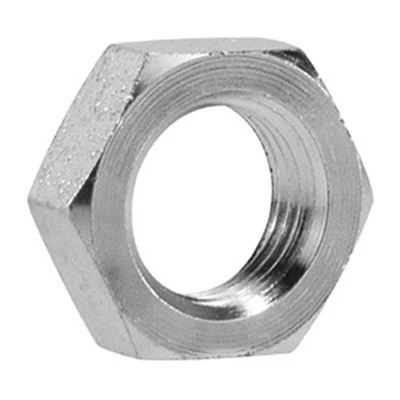
First off, let’s keep it simple: a coupling is that little (or not-so-little) mechanical part that connects two shafts together. Normally, one shaft is from a motor, engine, or power source, and the other’s hooked up to whatever needs to move—like a pump, conveyor belt, or industrial fan. You could just bolt the two shafts directly, right? But if you did that, you’d be asking for trouble. Here’s where the first big purpose kicks in: misalignment correction. Let’s be real—no matter how careful you are installing parts, shafts are never perfectly straight on the same axis. Like, say you’re putting a motor on a pump: the motor’s shaft might be slightly off, or the pump’s shaft twists a tiny bit when it’s running under load. If you force those two shafts to line up dead-perfect, that puts extra stress on the whole system—bearings wear out fast, shafts bend, and suddenly you’re calling us for emergency replacements way more than you need to. Couplings soak up that small misalignment—both angular (like one shaft is tilted a little) and parallel (they’re shifted side to side) —so the whole system runs smooth without grinding itself to bits. I’ve seen a plant skip a $150 coupling and end up replacing a $2,000 motor in a month. Don’t be that plant.
Next up: vibration damping. Let’s face it, motors and pumps vibrate. Some machines, like big saws or compressors, vibrate a ton—way more than your average office printer. If you connect two stiff shafts directly, that vibration travels straight from the power shaft to the load shaft, shaking every part in between. Over time, that vibration loosens bolts, cracks housing, and even messes up the accuracy of parts that need to move precise amounts—like on a CNC machine or a packaging line that counts small parts. Couplings act like a buffer here. The flexible ones, specifically—they have things like rubber inserts, polyurethane spiders, or even fluid fills that absorb that vibration before it gets to the sensitive parts. I had a client last year making medical devices with tiny, precision motors. They were using a rigid coupling and their parts were coming out with tiny defects because of vibration. Switched to a flexible jaw coupling with a rubber insert, and their defect rate dropped by 40%—all from swapping out a $20 part. That’s the kind of win no one sees coming.
Then there’s overload protection. This is a big one I don’t think people talk about enough. Let’s say a conveyor belt gets jammed—like a big box gets stuck, or a piece of raw material wedges in. If you have a direct shaft connection, all that extra torque from the jam goes straight to the motor, pump, or gearbox. That can burn out windings in a motor, snap a gear, or even crack the main housing—parts that cost hundreds or thousands to replace. But a lot of couplings are designed to slip or disconnect when torque gets too high. Like, our shear pin couplings—when the load gets too heavy, the pin snaps, which stops the power from getting to the jam, and you just replace the $5 pin instead of the whole motor. Or our disc couplings with slip discs that engage at a set torque level. I’ve had clients tell me these couplings have saved them tens of thousands in repair costs when a line jams—way more than the cost of a few couplings.
Wait, let’s not forget about making maintenance easier. If you have two shafts connected directly, taking one apart to repair or replace it means disconnecting everything realigning it back. That’s downtime—time when your machine’s not running, which costs you money. Couplings let you separate the two shafts quickly with a simple disconnect, no need to mess with the whole alignment again. Like our clamp-style couplings—you just loosen a couple set screws, pull the two halves apart, swap out the worn part, and clamp it back on. No special tools, no re-measuring everything. For plants running 24/7, that kind of quick fix is gold. We work with a packaging plant that does this on their high-speed lines—they switch out parts in minutes instead of hours. That’s more product shipped, more revenue.
Now, I want to be real—couplings aren’t one-size-fits-all. Like, if you’re dealing with high-speed applications, like a turbine or a high-precision spindle, you might go with a rigid coupling (no flexibility, perfect alignment) because flexibility would cause vibration at super high speeds. But if you have a lot of misalignment or vibration, flexible couplings are the way to go. If you need overload protection, shear pin or fluid couplings are your best bet. And if you need something for a small hobby project or a DIY setup, we have compact couplings too—no need to overbuy something big and heavy.
I also think it’s worth busting a myth here: some people think couplings are just a “middleman” part, not a critical component. But let’s run the numbers: if a $100 coupling keeps a $10,000 motor from breaking, that’s a 100x return. We see this all the time—customers who skimp on couplings end up paying way more in the long run. That’s why we make sure to tell every client we work with to match the coupling to their specific application, not just grab the cheapest one on the shelf.

Here’s the thing: whether you’re running a small machine shop, a big industrial plant, or a fabrication line, every part matters. The coupling might not be the flashiest part in your system, but it’s the one that keeps everything running without breaking down, saves you money on repairs, and cuts down on downtime. If you’re not sure what kind of coupling you need, or you’ve been dealing with issues like premature part wear, vibration, or jam-related damage, we’re here to help. Shoot us a message to chat through your needs—we can help you pick the right coupling, no fluff, no overcharging, just the parts that work for your setup. Don’t wait until you’re staring at a broken motor and a mountain of repair bills—reach out now, and let’s make sure your system runs smooth.
Cold Forged Parts References:
- Shigley’s Mechanical Engineering Design, 11th Edition, McGraw-Hill
- Couplings and Shaft Coupling Selection Guide, Machine Design Magazine
- Industrial Mechanical Components: Selection, Application, and Maintenance, Society of Manufacturing Engineers
Ningbo Jinghao Warm Upsetting Hydraulic Technology Co., Ltd.
As one of the most professional mechanical parts manufacturers and suppliers in China, we offer a wide range of products with superior quality. Please feel free to wholesale bulk customized mechanical parts from our factory. For quotation, contact us now.
Address: 32-1, Phase II, Wanyang Innovation & Entrepreneurship City, Shipu, Xiangshan County, Ningbo City
E-mail: 13736096018@163.com
WebSite: https://www.warmherding.com/
