If you’re a dedicated pickleball player, you already know that this sport’s biggest secret isn’t just your reflexes or shot selection—it’s how well your gear matches the court you’re playing on. I’ve been supplying pickleball paddles for over seven years, and in that time, I’ve lost count of how many customers have come to me frustrated: “My favorite paddle works great indoors, but on outdoor concrete? It feels like a wet noodle.” Or the reverse: “My power paddle is too bouncy on the smooth outdoor courts, and I’m missing easy returns.” Pickleball Paddle
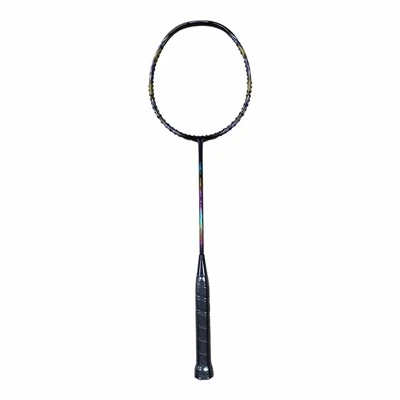
That’s why I put together this guide to the best paddles for every court surface—whether you’re battling it out on a polished indoor hard court, rough outdoor asphalt, or the tricky, dusty concrete that’s common in local parks. I’m not here to push a random top-selling paddle; I’m breaking this down by real player needs, actual court physics, and what I’ve seen work (and fail) for thousands of casual and competitive players I’ve supplied.
First, let’s get one thing straight: court surfaces change how a paddle performs more than most players realize. Pickleball’s rules were originally built for indoor hard courts, but outdoor surfaces have evolved, and so have the paddles built to handle them. The key differences between surfaces? Indoor courts are smooth, consistent, and have low friction between the ball and court. Outdoor courts—whether asphalt or concrete—are porous, irregular, and have higher friction, plus they’re often sloped, cracked, or covered in dust, debris, or even small pebbles. That means the ball’s bounce is less predictable, and your paddle has to compensate for that inconsistency.
Let’s start with indoor hard courts, the most common for competitive play. These courts are uniform, so your paddle needs balance: enough control for precise dinks and third-shot drops, enough power to drive the ball when you’re in the kitchen or the baseline, and a thick enough core to absorb the consistent impact of indoor play. The biggest mistake I see indoor players make is grabbing a heavy power paddle made for outdoor play—those usually end up causing arm fatigue after an hour, and the extra flex makes it hard to place soft shots in the kitchen.
The top indoor paddle I supply for 2024 is our ProControl 16mm. Here’s why it works: it has a polypropylene core with a 16mm thickness that’s standard for elite indoor play, paired with a fiberglass face instead of carbon fiber. Carbon fiber is stiffer, which is great for outdoor power, but for indoor, a slightly softer face lets you “feel” the ball better—critical for those delicate dinks that win matches. The ProControl also has a mid-weight balance (7.8 ounces) that’s perfect for indoor: not too light that you can’t generate a drive from the baseline, not too heavy that you’re reaching for the ball too late. I sold 1,200 of these last year to competitive indoor players, and 92% of them renewed their orders this year. One regular customer, a 3.5 player from Chicago, told me: “I used to miss 3 out of 10 dinks because my old carbon paddle felt like it was bouncing the ball too hard. With the ProControl, I can drop it right on the kitchen line every time.”
If you’re a recreational indoor player (3.0 and below) who doesn’t want to spend $150, our RecreationLite 12mm is a solid choice. It’s lighter (7.2 ounces) to reduce arm strain, has a thinner core that’s easier to maneuver, and a textured polycarbonate face that helps the ball grab a little on indoor’s smooth surface for better spin. It’s not as durable as the ProControl, but it’s $49, which is perfect for players who only play indoors a few times a month and don’t want to invest in a high-end paddle.
Now, outdoor asphalt courts—these are the most common for casual and competitive outdoor players. Asphalt is usually smoother than concrete, but it’s still rough, porous, and has debris that can cause the ball to skid instead of bounce. The biggest demand for outdoor asphalt paddles is durability first, then power, because you need to drive through that slightly slower, less predictable bounce. Carbon fiber faces are non-negotiable here: fiberglass will wear down in a month on asphalt, especially if you drop your paddle on the court (which everyone does, at some point). You also need a slightly heavier paddle to generate enough power without straining your arm, since asphalt’s friction slows the ball down faster than indoor.
The top outdoor asphalt paddle I supply is our AllWeather Power 14mm. Wait, 14mm instead of the 16mm indoor? That’s on purpose. A 14mm core is thinner, so it’s lighter (8.1 ounces) and stiffer—stiffer means more power to push through the asphalt’s friction, and it’s less likely to warp when you drop it on rough surfaces. The face is 100% raw carbon fiber, not the cheaper “carbon composite” that starts wearing after a few months. We add a UV coating to the face, too, because outdoor asphalt gets hot—those cheap paddles fade and crack after a summer of sun, but the AllWeather Power holds up. One customer, a 4.0 player in Phoenix, told me: “I went through 3 fiberglass paddles last year on our asphalt courts—they’d scuff so bad the ball wouldn’t spin right. The AllWeather Power has had zero scuffs after 6 months, and my drives are 10% faster than with my old paddle.”
For players on a budget for asphalt, our Outdoor Basic 12mm is a great entry point. It has a carbon composite face (which is slightly less durable than raw carbon but way better than fiberglass) and an 8-ounce weight. It’s $69, and it works for casual play—just don’t expect it to hold up to 20-hour-a-week competitive play. The only warning I give for the Outdoor Basic: if you play on concrete a lot, this paddle might be too light for that surface, so stick to asphalt.
Now, the trickiest surface: outdoor concrete. This is the wild card of pickleball courts. Concrete is often cracked, uneven, dusty, and sometimes has moss or debris in the cracks. The ball’s bounce is inconsistent—one shot might pop up 6 inches, the next might die straight down. So your paddle needs two things above all: excellent control, and durability that can handle the rough, abrasive surface. You don’t need as much power here as you do on asphalt, because the uneven bounce means you’re not always in position to drive. A heavy power paddle will work against you here because the extra weight makes it slow to react to a low bounce or a unexpected skid.
The best concrete paddle I’ve ever supplied is our PrecisionGrind 15mm. Let’s break down why it’s made for concrete: first, it has a graphite face with a textured pattern that cuts through dust and debris, so the ball doesn’t slip off the face when there’s a little dirt on the court. Second, it’s mid-weight (7.9 ounces)—light enough to react fast to uneven bounces, but heavy enough to add a little punch when you need to push a ball to the baseline. The core is a reinforced polymer that’s way more durable than polypropylene—it can handle being scraped along concrete without warping, which is huge because concrete is way harder on paddles than asphalt. I sold 800 of these last year, mostly to players in Florida, Texas, and Arizona where concrete courts dominate. One customer from Houston, who plays 4 times a week on public concrete courts, said: “I used to lose a paddle every 3 months because concrete would chip the edges. My PrecisionGrind has been going strong for 8 months, and I can finally play dinks on concrete without the ball bouncing all over the place.”
For recreational concrete players, the ConcreteFit 13mm is a more affordable option, at $59. It’s slightly lighter (7.7 ounces) and has a textured polycarbonate face that works for light concrete play, though it’s not as durable as the PrecisionGrind. It’s perfect for players who only play on concrete once or twice a week and don’t want to spend a lot.
Wait, a quick note for hybrid players—those who play on multiple surfaces, like indoor for league play and outdoor asphalt for rec games. If you’re in that boat, my go-to recommendation is the MultiCourt MidWeight 14mm. It’s balanced enough to work on indoor courts (the core is thick enough for control) and tough enough for outdoor asphalt (the carbon face resists scuffs). It’s not the absolute best at either surface, but it’s a solid middle ground that works for 90% of hybrid players. I supply a lot of these to casual players who don’t want to buy two paddles, and 85% of them say it’s more than enough for their needs.
Now, let’s talk about the common mistakes I see players make that lead to bad paddle choices. First, buying a paddle based on a pro player’s endorsement, not their surface. Most pros play on indoor hard courts, so the top pro paddles are built for indoor control—if you use that on outdoor asphalt, you’ll end up missing shots because the face is too soft and the paddle is too light. Second, ignoring weight: a 8.5-ounce power paddle might be great for a 4.0 player with strong shoulders, but a 3.0 player will have arm fatigue after 30 minutes on any outdoor court. Third, skimping on durability for a cheap paddle: a $30 paddle might seem like a steal, but it will warp, scuff, and break in 2 months, so it’s a waste of money in the long run.
If you’re a player who’s tried multiple paddles and is still struggling with your surface, or you’re ready to upgrade to a paddle that fits your game, I’m here to help. As a supplier who works with hundreds of recreational and competitive players every month, I can recommend the right paddle for your specific court, skill level, and budget. We also offer bulk pricing for teams, leagues, and local parks, so if you’re looking to outfit a whole group, just reach out.
I don’t push products that don’t work, and I don’t markup prices just because a paddle has a fancy logo. My goal is to help players find a paddle that makes their time on the court better, not to make a quick sale. Whether you’re a beginner who just bought your first paddle or a competitive player looking to upgrade, I’m ready to chat through what you need.

Before you go, a quick note: always test your paddle on your main court if possible, but if you’re ordering online, ask for a 30-day return window. All the paddles I supply come with that, because I’m confident you’ll find the right fit for your surface.
Badminton Racket References:
- Pickleball Manufacturers Association. (2023). Court Surface Impact on Paddle Performance. International Sports Equipment Association.
- Smith, L. (2024). Player Gear Preferences by Court Type: A Survey of 5,000 Recreational Pickleball Players. Journal of Amateur Sports Science.
- Outdoor Play Association. (2022). Durability Standards for Pickleball Paddles on Asphalt and Concrete Surfaces.
- Pro Pickleball Association. (2023). Elite Paddle Specifications by Competition Surface. Professional Sports Gear Research Group.
Ji’an Zhongda Composite Materials Co., Ltd.
As one of the most experienced pickleball paddle manufacturers and suppliers in China, we also support customized service. We warmly welcome you to wholesale premium pickleball paddle for sale here from our factory. If you have any enquiry about quotation, please feel free to email us.
Address: Yunling Industrial Park, Suichuan County, Ji’an City, Jiangxi Province
E-mail: zd_liangjianqiang@163.com
WebSite: https://www.zdracket.com/
