As an Air Handling Unit (AHU) supplier, I’ve spent thousands of hours walking clients through the process of using diagnostic tools to keep their units running smoothly—and I know firsthand that skipping these steps often leads to costly breakdowns, uneven air quality, and unnecessary energy waste. A lot of facility managers treat AHUs as “set-it-and-forget-it” equipment, but the truth is, proactive diagnostics don’t just fix problems—they prevent them before they start. Let’s break down how to use diagnostic tools effectively, from daily checks to deep, quarterly assessments, tailored to how our team at [Your Company Name] supports clients across commercial and industrial spaces. Air Handling Unit
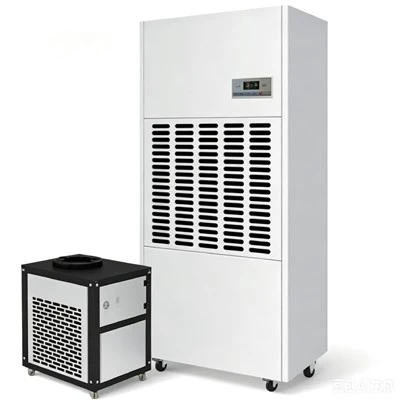
First, it’s critical to understand that AHU diagnostic tools aren’t just for troubleshooting; they’re for baseline performance tracking. When you first install a new AHU (or after a major maintenance overhaul), our team always helps clients set a baseline: the right static pressure across supply and return ducts, the delta T (temperature difference) between supply and return air, fan speed, and filter pressure drop. Without that baseline, you can’t tell if a reading is a minor issue or a sign of something serious. That’s where tools come in. Let’s start with the most essential tools you’ll use, and how to deploy them step-by-step.
The first tool every AHU operator should have is a digital manometer. This is our top-selling diagnostic tool for a reason—it’s affordable, portable, and measures static pressure, which is one of the most common red flags for AHU issues. Static pressure is the force of air inside the duct system, and when it’s too high, it means airflow is restricted (usually from dirty filters, closed dampers, or a clogged coil). When it’s too low, it means air is leaking or fans aren’t operating at full efficiency. To use a manometer correctly, turn off the AHU first (safety first—never work on a running unit), then locate the static pressure ports on the supply and return ducts. Most AHUs have these ports installed during manufacturing, but if yours don’t, our team can add them during a routine service. Connect the manometer’s probes to each port, wait 30 seconds for a stable reading, and compare it to your baseline. For example, if your baseline supply static pressure is 0.8 inches of water column (inH2O) and it jumps to 1.2 inH2O, that’s a clear sign your filter is clogged and needs replacement.
Next, an anemometer is non-negotiable for measuring airflow velocity. Airflow is the lifeblood of an AHU—if it’s off, the entire HVAC system will be inefficient. A hot-wire anemometer is best for AHUs because it measures low-velocity air accurately, unlike older vane anemometers which can be less precise. To use an anemometer, turn the AHU to its normal operating mode (not idle), hold the device 10 inches away from the supply air grill, and take three readings across the grill’s surface (one in the center, one near each edge) to get an average. Multiply that average velocity by the area of the grill (in square feet) to get cubic feet per minute (CFM), which is your actual airflow. If your baseline CFM is 1,500 and this reading is only 1,200, that could mean a broken fan belt, a dirty evaporator coil, or a faulty fan motor. Our team often shares simple CFM calculation cheat sheets with clients so they don’t have to guess.
For temperature and humidity checks, a digital psychrometer is the tool of choice. This device measures both dry-bulb temperature (the air temperature) and wet-bulb temperature, which lets you calculate relative humidity and enthalpy—key metrics for indoor air quality (IAQ). To use it, take readings at the AHU’s supply air outlet and return air inlet, and also in occupied spaces to cross-reference. If your return air humidity is 55% and supply air humidity is only 40%, that means your humidifier is working correctly, but if supply air is 60%, your dehumidifier (if equipped) needs a filter change or coil cleaning. We recently had a client who was complaining of stuffy offices, and a psychrometer check revealed their AHU’s supply humidity was 62%—just 2% higher than the 50% baseline recommended for commercial spaces. Turns out their condensation drain was clogged, so the coil wasn’t removing moisture properly. Fixing that drain cost less than $100 and fixed their IAQ issue immediately.
Now, let’s talk about more advanced diagnostic tools for when you’re dealing with persistent issues. A vibration analyzer is used for fan motors, blowers, and shafts to detect early signs of wear. Unbalanced fan blades, misaligned shafts, or worn bearings will show up as abnormal vibration readings before they cause a breakdown. Our team recommends using a vibration analyzer quarterly for critical AHUs (like those in hospitals or data centers) to catch issues early. Another advanced tool is a carbon monoxide (CO) detector, especially for AHUs that use gas burners or are located near parking garages. A leak in the burner or improper exhaust can lead to CO buildup, which is a major safety hazard. We always advise clients to attach a portable CO detector near the AHU’s return air intake to run a routine test monthly.
So how do you turn these tool readings into action? Let’s walk through a real-world example that our team helped a client with last year. A 10-story office building was experiencing uneven heating on upper floors. First, we had the facility manager use a digital manometer: the supply static pressure on the 10th floor was 1.1 inH2O, way above the 0.7 baseline. A check of the filter near that floor’s AHU showed it was caked with dust—they’d skipped a filter change for three months. After replacing the filter, static pressure dropped to 0.75, but upper floor airflow was still low. An anemometer check revealed CFM on upper floors was 20% below baseline, so we pulled the AHU’s access panel to inspect the fan. We found a loose fan belt slipping at high speed, and the motor’s pulley was slightly misaligned. Tightening the belt and realigning the pulley fixed the airflow issue within an hour. That entire diagnostic and repair cost less than $500, versus the $2,000+ they would have spent if the fan had seized completely and caused a multi-day shutdown.
One mistake we see clients make is using outdated tools or skipping baseline checks. A lot of facility managers rely only on their AHU’s built-in controls, but those controls often only track basic metrics (like on/off status) and don’t give precise readings for static pressure or airflow. Our AHU units come pre-calibrated with easy-to-read ports for manometers and temperature sensors, which cuts down on diagnostic time. We also offer free baseline performance checks for our clients in their first year of ownership, so they have a clear reference point before any issues arise.
Safety can’t be overstated when using these diagnostic tools. Always lock out and tag the AHU before accessing internal parts, especially when working with electrical components or fans. Wear personal protective equipment (gloves, goggles, dust masks) when handling dirty filters or coils. If you’re not comfortable working on the AHU’s internal parts, reach out to a professional—our team is always available for same-day service calls for diagnostic checks or repairs.
Regular diagnostic checks don’t just save money; they extend the lifespan of your AHU. Studies from the HVAC industry show that a well-maintained AHU with regular diagnostics lasts 5-10 years longer than one that’s only fixed when it breaks. For our commercial clients, that means avoiding capital expenses for a new AHU every 15-20 years, instead getting 25-30 years of reliable performance from their unit.
Refrigerant Levitation Centrifugal Chiller If you’re not sure where to start with diagnostic tools for your AHU, or you’re dealing with persistent performance issues, our team is here to help. We can walk you through tool setup, baseline testing, or come to your site for a full diagnostic assessment. We also offer training sessions for your maintenance staff to make sure they feel confident using these tools correctly, so you can catch issues before they turn into big problems.
References
- American Society of Heating, Refrigerating and Air-Conditioning Engineers. (2021). HVAC Systems and Equipment Handbook. ASHRAE.
- Air Conditioning Contractors of America. (2020). Air Handling Unit Maintenance and Diagnostic Procedures. ACCA.
- U.S. Department of Energy. (2019). Commercial HVAC System Diagnostics Guide. Office of Energy Efficiency & Renewable Energy.
Hangzhou Dayu HVAC Engineering Co., Ltd.
As one of the most professional air handling unit manufacturers and suppliers in China, we have world-leading production equipment and strong manufacturing capabilities. If you’re going to buy customized air handling unit made in China, welcome to get quotation from our factory. For price consultation, contact us.
Address: Room 1004, Building 1, Xicheng Business Tower, Xihu District, Hangzhou City, Zhejiang Province, China
E-mail: info@hi-hvac.com
WebSite: https://www.hi-hvac.com/
