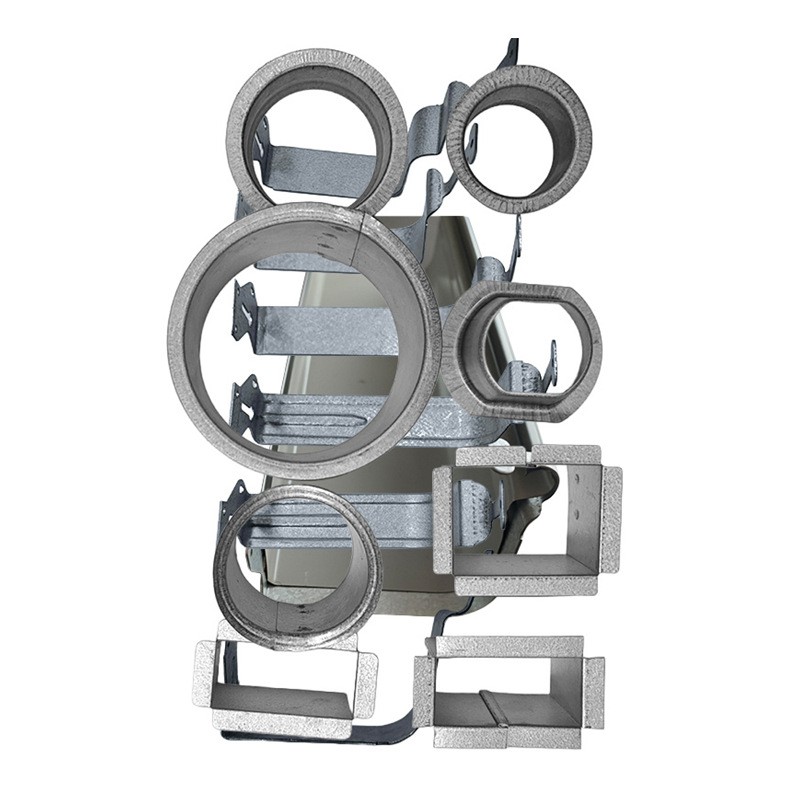
As a supplier of stamped metal parts, I’ve witnessed firsthand the critical role that lubricants play in the stamping process. In this blog post, I’ll delve into the various aspects of how lubricants contribute to the efficiency, quality, and longevity of the stamping operations for metal parts. Stamped Metal Parts

Reducing Friction and Wear
One of the primary functions of lubricants in the stamping process is to reduce friction between the metal part and the stamping tool. Friction is an inevitable force that occurs when two surfaces come into contact and move relative to each other. In stamping, this friction can lead to excessive wear on both the tool and the metal part.
When the stamping tool presses against the metal sheet, without proper lubrication, the high pressure and relative motion can cause the surfaces to rub against each other aggressively. This results in increased wear on the tool’s cutting edges, which can lead to premature tool failure. The metal part may also experience surface damage, such as scratches and burrs, which can compromise its quality.
Lubricants act as a barrier between the tool and the metal part, reducing the direct contact and thus minimizing friction. They form a thin film on the surfaces, allowing the tool to glide smoothly over the metal sheet. This not only extends the life of the stamping tool but also improves the surface finish of the metal part. For example, in the stamping of automotive body parts, a high – quality lubricant can ensure that the parts have a smooth and defect – free surface, which is crucial for both aesthetic and functional reasons.
Cooling the Stamping Process
Another important role of lubricants is to dissipate heat generated during the stamping process. Stamping involves high – pressure deformation of the metal, which generates a significant amount of heat. If this heat is not properly managed, it can have several negative effects.
Excessive heat can cause the metal to harden in an uncontrolled manner, leading to cracks and other defects in the stamped part. It can also cause thermal expansion of the stamping tool, which can affect the dimensional accuracy of the parts. Additionally, high temperatures can break down the lubricant itself, reducing its effectiveness.
Lubricants help to cool the stamping process by absorbing and carrying away the heat. They have good thermal conductivity, which allows them to transfer the heat from the contact area between the tool and the metal part to the surrounding environment. This helps to maintain a stable temperature during the stamping process, ensuring the quality and consistency of the stamped parts.
Preventing Corrosion
Metal parts are susceptible to corrosion, especially when they are exposed to moisture and oxygen. In the stamping process, the metal surface is often deformed and may have small scratches or exposed areas, which can be more prone to corrosion.
Lubricants can act as a protective barrier against corrosion. They form a thin film on the surface of the metal part, preventing moisture and oxygen from coming into contact with the metal. This is particularly important for stamped parts that will be used in environments where corrosion is a concern, such as in outdoor applications or in the presence of chemicals.
For example, in the stamping of electrical components, a corrosion – resistant lubricant can protect the metal parts from rust and other forms of corrosion, ensuring their long – term performance and reliability.
Improving Formability
Formability refers to the ability of a metal to be deformed into a desired shape without cracking or tearing. Lubricants play a crucial role in improving the formability of metal parts during the stamping process.
By reducing friction, lubricants allow the metal to flow more easily under the pressure of the stamping tool. This means that more complex shapes can be formed with less risk of defects. For instance, in the stamping of deep – drawn parts, a good lubricant can help the metal to stretch and flow smoothly into the die cavity, resulting in a high – quality part with accurate dimensions.
Types of Lubricants for Stamping
There are several types of lubricants used in the stamping process, each with its own advantages and applications.
- Mineral Oil – Based Lubricants: These are the most commonly used lubricants in stamping. They are relatively inexpensive and have good lubricating properties. Mineral oil – based lubricants can be used for a wide range of metals and stamping operations. However, they may leave a residue on the parts, which may require additional cleaning steps.
- Synthetic Lubricants: Synthetic lubricants offer better performance in terms of high – temperature stability and corrosion resistance. They are often used in high – speed stamping operations or for stamping difficult – to – form metals. Synthetic lubricants are more expensive than mineral oil – based lubricants but can provide significant benefits in terms of tool life and part quality.
- Water – Based Lubricants: Water – based lubricants are environmentally friendly and easy to clean. They are suitable for applications where the presence of oil residues is not acceptable. However, they may have lower lubricating properties compared to oil – based lubricants and may require more frequent application.
Selecting the Right Lubricant
Selecting the right lubricant for the stamping process is crucial for achieving optimal results. Several factors need to be considered when choosing a lubricant:
- Metal Type: Different metals have different properties, and the lubricant needs to be compatible with the specific metal being stamped. For example, aluminum requires a different lubricant than steel due to its lower melting point and different surface characteristics.
- Stamping Operation: The type of stamping operation, such as blanking, drawing, or forming, also affects the choice of lubricant. Each operation has different requirements in terms of friction reduction and heat dissipation.
- Environmental Considerations: In today’s environmentally conscious world, it’s important to consider the environmental impact of the lubricant. Water – based lubricants are often preferred for their lower environmental impact.
Conclusion
In conclusion, lubricants play a vital role in the stamping process of metal parts. They reduce friction and wear, cool the process, prevent corrosion, and improve formability. As a supplier of stamped metal parts, I understand the importance of using the right lubricant to ensure the quality and efficiency of our products.
Stamping Small Parts If you’re in the market for high – quality stamped metal parts, I encourage you to reach out to us for a procurement discussion. We have the expertise and experience to provide you with the best solutions for your stamping needs.
References
- Smith, J. (2018). Handbook of Metal Stamping. Elsevier.
- Jones, A. (2019). Lubrication in Metal Forming Processes. Springer.
- Brown, C. (2020). Advances in Metal Stamping Technology. Wiley.
Yuyao Aozhou Metal Products Co., Ltd.
We are one of the most experienced stamped metal parts manufacturers and suppliers in China. With a professional production team, we are able to meet the needs of the majority of our customers. Please rest assured to buy customized stamped metal parts made in China here from our factory.
Address: No.6, Nanbailonggang, Wuma Industrial Zone, Lubu Town, Yuyao City
E-mail: xqr-2316@163.com
WebSite: https://www.cnaozhou.com/
